
Your leather inventory represents a significant investment, whether you’re storing raw hides, semi-finished materials, or completed products ready for market. Yet one of the most overlooked aspects of running a successful leather goods business is proper storage. The truth is harsh: improper leather storage can destroy thousands of dollars’ worth of inventory overnight, and the damage is often irreversible by the time you discover it.
As we move into 2026, the stakes are higher than ever. The leather goods market is projected to reach over $590 billion by 2029, with brands competing fiercely for quality-conscious customers who expect perfection. In this competitive landscape, you simply cannot afford to let storage mistakes compromise your product quality, damage your brand reputation, or eat into your profit margins.
Whether you’re a manufacturer producing leather bags, a retailer managing seasonal inventory, or a leather goods brand navigating the complexities of supply chain management, understanding these critical storage errors could mean the difference between thriving and merely surviving in 2026’s demanding market.
Why Proper Leather Storage Matters More Than Ever
Before we dive into the specific mistakes, let’s establish why leather storage deserves your serious attention right now.
Leather’s unique properties make it both durable and vulnerable. Unlike synthetic materials that remain relatively stable regardless of storage conditions, genuine leather constantly interacts with its environment. It absorbs moisture from humid air, loses essential oils in dry conditions, and reacts to temperature fluctuations, light exposure, and contact with other materials.
The leather industry in 2025 faced significant challenges, production declined 4 percent in key manufacturing regions, and brands dealt with rising costs, supply chain disruptions, and increased consumer expectations around sustainability and quality. Moving into 2026, these pressures aren’t easing. Every piece of leather in your inventory represents both a financial investment and a quality promise to your customers.
Poor storage practices create three major problems. First, they cause direct product damage, mold growth, color fading, cracking, shape deformation, and permanent staining. Second, they force you to absorb losses through inventory write-offs, discounting damaged goods, or expensive restoration attempts. Third, they risk your brand reputation when defective products reach customers who expected perfection.
The good news? Most leather storage mistakes are completely preventable once you understand what causes damage and how to avoid it.
Mistake #1: Using Plastic Containers and Non-Breathable Materials
This is the single most common and devastating leather storage mistake that brands make. It seems logical, plastic storage boxes and bags protect items from dust, keep them organized, and stack efficiently. Unfortunately, what works perfectly for storing kitchen supplies or holiday decorations is disastrous for leather products.
Why Plastic Destroys Leather
Leather is a natural material that needs to breathe. It constantly exchanges moisture with its environment, maintaining a delicate balance that keeps it supple and prevents deterioration. When you seal leather goods in plastic containers or wrap them in plastic bags, you create an airtight environment where moisture cannot escape.
That trapped moisture becomes a breeding ground for mold and mildew. Within weeks, sometimes days in humid conditions, you’ll find fuzzy growth spreading across your leather inventory. The mold doesn’t just sit on the surface; it penetrates the leather fibers, causing permanent staining and weakening the material’s structure. Even if you catch it early and clean it off, the damage is done.
Plastic also causes another insidious problem: condensation. Temperature fluctuations cause moisture to condense on plastic surfaces. That moisture drips onto your leather products, creating water spots, staining, and areas of concentrated mold growth.
The Right Way to Store Leather
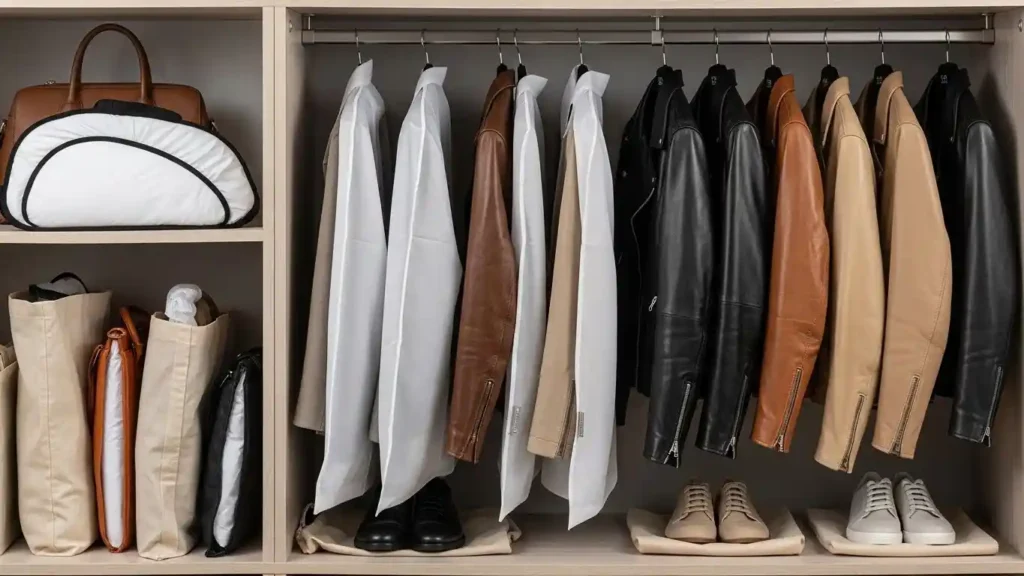
For leather storage in 2026, breathability is non-negotiable. Use cotton dust bags, canvas storage covers, or acid-free tissue paper for wrapping individual items. Breathable, dust- and light-resistant materials.
For raw leather hides and finished leather inventory, use heavy protective paper, not plastic, for wrapping. The paper should be dark colored to block ambient light. Tie wrapped items gently with soft cotton string, never with plastic twist ties or synthetic cords that can leave marks.
If you need enclosed storage, choose wooden shelves or metal racks in open spaces rather than sealed plastic bins. The key is maintaining air flow around every piece of leather inventory.
For brands managing large leather goods inventory, invest in proper garment racks with breathable canvas or cotton covers for items like leather jackets and leather bags. The investment pays for itself by preventing thousands in inventory losses.
Mistake #2: Ignoring Temperature and Humidity Control
Environmental control is where many brands, especially smaller operations or those expanding into new warehouse space, fall short. You wouldn’t store wine or pharmaceuticals without climate control, yet brands routinely store valuable leather inventory in unconditioned spaces with wildly fluctuating conditions.
The Temperature Problem
Leather products perform best when stored between 60-75°F (15-24°C). Temperatures outside this range cause problems. Extreme cold makes leather brittle and prone to cracking. The material loses flexibility, and attempting to handle or work with cold leather can cause permanent damage.
Heat is equally destructive. High temperatures dry out the natural oils in leather, causing it to become stiff, crack along stress points, and lose its supple feel. For finished leather goods, heat can also cause adhesives to fail, linings to separate, and protective finishes to crack.
Temperature fluctuations might be even worse than consistent temperature extremes. When leather repeatedly expands and contracts through temperature changes, the fibers weaken and deteriorate faster than they would at a consistent temperature.
The Humidity Challenge
Humidity control matters just as much as temperature. The ideal humidity range for leather storage is 40-60%, with 50-55% being optimal for most leather types.
Too much humidity invites mold and mildew growth. In conditions above 70% humidity, mold can establish in just 48-72 hours on leather surfaces. High humidity also causes leather to absorb excess moisture, leading to shape deformation, stretching, and water staining.
Too little humidity creates different problems. In very dry conditions with below 30% humidity, leather loses its natural moisture and oils. The material becomes stiff, develops surface cracks, and loses the supple texture that customers expect from quality leather goods.
Implementing Proper Climate Control
For brands serious about leather inventory management in 2026, climate control isn’t optional; it’s essential. If you’re storing significant leather goods inventory, invest in commercial dehumidifiers for humid climates and humidifiers for dry environments.
Install hygrometers throughout your storage areas to monitor conditions continuously. Digital models with data logging let you track conditions over time and identify problem areas before damage occurs.
For smaller operations, even basic climate awareness helps. Avoid storing leather products in attics (too hot in summer), unfinished basements (too humid), or garages (too many temperature swings). Choose interior spaces with consistent conditions.
In humid climates, use silica gel packets or cedar blocks placed near (not touching) leather items to absorb excess moisture. Replace these regularly as they become saturated.
Mistake #3: Exposing Leather to Direct Light
Light damage might be the most insidious storage mistake because it happens gradually. You might not notice anything wrong for weeks or months, then suddenly realize your entire inventory has faded, discolored, or developed a brittle texture.
How Light Damages Leather
Both natural sunlight and artificial lighting contain UV radiation that breaks down leather fibers over time. This process, called photo-degradation, is similar to how sunlight fades upholstery fabrics or damages wooden furniture.
Vegetable-tanned leather is particularly vulnerable to light damage. When exposed to any light, even ambient indoor lighting, the exposed areas darken significantly while protected areas remain lighter. This creates permanent, uneven coloring that ruins the leather’s appearance.
Direct sunlight is catastrophic for leather storage. UV radiation accelerates the chemical breakdown of the leather fibers, causing loss of strength, flexibility, and surface integrity. Colors fade dramatically, with rich browns turning pale and blacks developing a reddish cast.
Heat from sunlight compounds the damage by drying out natural oils, creating a double assault that can render leather goods unsellable in remarkably short time spans.
Protecting Leather from Light Damage
Store all leather products in dark or low-light environments. This is absolutely critical for raw leather hides, finished goods inventory, and especially for leather bags, leather jackets, and items with natural or lightly finished surfaces.
Avoid any storage location with windows, skylights, or direct artificial lighting. If windows exist in your storage space, install blackout curtains or UV-filtering window films.
Wrap leather inventory in heavy, dark-colored protective paper that blocks ambient light. For individual leather goods, use opaque dust bags rather than clear garment covers.
For retail display areas where some light exposure is unavoidable, rotate inventory regularly so no pieces sit under lights for extended periods. Use LED lighting, which produces less UV radiation than traditional bulbs, and install UV filters on display case lighting.
Never leave leather products displayed in storefront windows exposed to direct sunlight. This applies whether you’re a retailer or a manufacturer with showroom displays. TThe damage is happening from day one, even if not immediately visible.
Mistake #4: Improper Stacking and Cramming Inventory
Space is expensive, so the temptation to maximize every square foot of storage is understandable. However, cramming too much leather inventory into too little space causes specific types of damage that compromise product quality.
The Pressure and Deformation Problem
Leather products are surprisingly vulnerable to pressure and weight. When you stack multiple items on top of each other, the weight compresses the bottom pieces. This pressure creates permanent creases, flattens structured items like leather bags, and leaves imprints from whatever’s pressing on them.
For leather jackets, poor storage causes shoulder bumps from hangers, permanent creases from folding, and misshapen collars or sleeves. For leather bags, compression crushes the structure, creates permanent fold lines, and damages corners and edges.
Raw leather hides are even more susceptible. Heavy stacking can leave permanent marks, create thickness variations, and cause the leather to bond slightly where pieces overlap, leaving marks when you separate them.
The Air Circulation Issue
Cramming leather inventory tightly together prevents air circulation, creating microclimates where humidity builds up and mold can establish. You might have perfect climate control in the room overall, but between tightly packed items, conditions are perfect for mold growth.
Storage Best Practices for Space Management
For leather goods inventory, give each item adequate space. Leather bags should be stored upright with stuffing to maintain their shape, never crushed flat or squeezed between other items. Stuff bags with acid-free tissue paper or clean cotton cloth, avoiding newspaper, which can transfer ink.
Hang leather jackets and garments on padded hangers that support the shoulders properly. Leave space between hanging items; they shouldn’t touch or press against each other. When you must stack items, limit the stack height based on the weight and structure of what you’re storing. Place heavier, more structured items on lower shelves. Use shelf dividers or storage boxes to prevent items from sliding and pressing against each other.
For raw leather storage, roll hides rather than folding them when possible. If you must stack, use protective paper between layers and limit stack height. Heavy commercial steel shelving with adequate weight capacity is essential; leather is surprisingly heavy, especially in quantity.
Create a systematic inventory rotation. Items stored longest should be moved and used first, preventing any pieces from remaining in static storage conditions indefinitely.
Mistake #5: Storing Dirty or Unconditioned Leather
This mistake often happens when brands receive shipments, complete production runs, or rotate seasonal inventory. You’re busy, so leather goods go directly into storage with the intention of cleaning and conditioning them later. That “later” might be when you pull them for sale or shipment, and discover they’re in worse condition than when they went in.
Why Clean Leather Matters for Storage
Dirt, dust, body oils, and residue on leather surfaces don’t just sit there harmlessly during storage. These contaminants attract moisture, create breeding grounds for mold, and can cause permanent staining that sets in over time.
Body oils and product residue are particularly problematic. Even handling leather products with bare hands transfers oils that gradually penetrate the leather. In storage, these oils can darken the leather, create sticky patches, or turn rancid, producing unpleasant odors.
For finished leather goods that customers have tried on or handled, failing to clean before storage means storing all the accumulated dirt, sweat, and oils from those interactions. These contaminants continue to damage the leather throughout the storage period.
The Conditioning Question
Leather’s natural oils maintain its suppleness and prevent cracking. Over time, these oils evaporate or break down, especially in storage. Unconditioned leather going into long-term storage is leather that will likely emerge dry, stiff, and cracked.
This is particularly critical for leather goods inventory that might sit for months during slow seasons or for overstock that you’re holding for future sale. Without conditioning before storage, these items deteriorate while just sitting on your shelves.
Pre-Storage Preparation Protocol
Implement a mandatory preparation protocol for all leather items going into storage. This should include thorough cleaning using appropriate methods for the leather type, complete drying time before storage (never store damp leather), and conditioning with quality leather conditioner suitable for the specific leather type.
For raw leather inventory, ensure hides are completely dry and properly processed before storage. Any moisture content creates mold risk. For finished products, inspect for damage, clean carefully, and condition as needed.
Document what preparation was done and when. This helps you track which inventory needs attention when you pull it from storage and ensures nothing sits too long without maintenance.
For long-term storage exceeding six months, consider pulling inventory for inspection and reconditioning every 3-6 months. While this adds labor, it prevents discovering damaged goods only when you’re ready to sell them.
Additional Storage Considerations for 2026

Beyond these five major mistakes, several other factors deserve attention as you refine your leather storage practices for 2026.
Separation by Leather Type
Different leather types have different storage needs. Oily leathers like harness or latigo can stain other leather types through oil transfer. Store these separately with barriers between them and non-oily leathers.
Vegetable-tanned leather is more sensitive to light and moisture than chrome-tanned leather. Suede and nubuck require even more careful handling to prevent crushing their nap texture.
Chemical and Odor Exposure
Leather absorbs odors from its environment. Storage areas near paint, solvents, strong perfumes, or other odor sources can result in leather goods that smell unpleasant, damage that’s nearly impossible to fully reverse.
Keep storage areas clean, well-ventilated, and free from chemical exposure. Never store leather inventory near automotive fluids, cleaning supplies, or anything with strong fumes.
Security and Pest Control
Leather products represent valuable inventory requiring security measures. But equally important is pest control. Insects, particularly carpet beetles and certain moths, can damage stored leather. Regular inspection and professional pest management prevent discovering insect damage too late.
Documentation and Inventory Management
Track what’s in storage, how long it’s been there, and its condition. Digital inventory management systems help ensure nothing sits too long, making it easier to rotate stock and catch problems early.
Frequently Asked Questions About Leather Storage
What is the ideal temperature for storing leather goods?
The ideal temperature range for storing leather goods is 60-75°F (15-24°C), with 65-70°F being optimal. Avoid temperature extremes and fluctuations. Extreme cold makes leather brittle, while heat dries out natural oils, causing cracking. Consistent temperature within this range preserves leather quality and extends product lifespan significantly.
How long can leather goods be stored safely?
With proper storage conditions, correct temperature and humidity, darkness, breathable materials, and regular conditioning, quality leather goods can be stored for years without damage. Raw leather hides can last decades when properly stored. However, leather should be inspected every 3-6 months during long-term storage to catch any emerging issues early and recondition as needed.
Why is plastic bad for storing leather?
Plastic creates an airtight seal that prevents leather from breathing. Trapped moisture leads to rapid mold and mildew growth, often within days in humid conditions. Plastic also causes condensation from temperature changes, creating water spots and accelerating deterioration. Always use breathable materials like cotton dust bags, canvas covers, or acid-free tissue paper instead.
What humidity level is best for leather storage?
The optimal humidity range for leather storage is 40-60%, with 50-55% being ideal. Humidity above 70% promotes mold growth, while humidity below 30% causes leather to dry out, crack, and lose flexibility. Use hygrometers to monitor humidity levels and dehumidifiers or humidifiers to maintain proper conditions in your storage areas.
How do I prevent mold on stored leather?
Prevent mold by maintaining 40-60% humidity, ensuring good air circulation, using breathable storage materials (never plastic), storing leather in dark or low-light areas, keeping leather clean before storage, and using silica gel packets or cedar blocks for moisture absorption. Regular inspection every few months allows you to catch and address any mold growth immediately before it becomes severe.
Should leather be conditioned before or after storage?
Leather should be cleaned and conditioned BEFORE going into storage. Conditioning replenishes natural oils that prevent drying and cracking during storage. For long-term storage exceeding 6 months, pull inventory periodically for inspection and reconditioning. Never store dirty or unconditioned leather, as contaminants cause damage throughout the storage period.
What’s the best way to store leather bags long-term?
Store leather bags upright, stuffed with acid-free tissue paper to maintain shape, in breathable dust bags, on shelves with good air circulation, away from direct light and heat sources, and in climate-controlled spaces (60-75°F, 40-60% humidity). Clean and condition bags before storage. Never fold, stack, or compress bags, as this causes permanent creasing and shape deformation.
Can UV light damage leather in storage?
Yes, UV light from both sunlight and artificial lighting causes serious damage to stored leather. UV radiation breaks down leather fibers (photo-degradation), causes uneven discoloration and fading, dries out natural oils leading to cracking, and weakens leather structure. Always store leather in dark or low-light environments, use opaque storage coverings, and avoid any storage location.
Protect Your Leather Investment with Expert Knowledge
The difference between leather inventory that maintains its quality and leather that deteriorates into unsellable waste often comes down to storage practices. As you’ve seen, the five critical mistakes using plastic materials, ignoring climate control, exposing leather to light, cramming inventory, and storing dirty or unconditioned leather are completely avoidable with the right knowledge and systems.
Moving into 2026, the leather goods market demands perfection. Customers expect quality, sustainability matters more than ever, and competition is fierce. You cannot afford to let storage mistakes compromise your products, damage your brand reputation, or eat into your profit margins.
At Akram Tannery, we understand leather at the molecular level, how it behaves, what it needs, and how to preserve its quality through every stage from production to final product. Our decades of experience producing premium upholstery leather, vegetable tanned leather, and specialized finishes have taught us that quality doesn’t end when leather leaves the tannery. How you store and maintain it determines whether it reaches customers in pristine condition.
Whether you’re sourcing raw leather materials, managing finished goods inventory, or developing your next leather product line, the expertise required extends beyond just selecting quality leather. Understanding proper storage, handling, and preservation ensures your investment maintains its value.
Ready to elevate your leather business with expert guidance? Visit akramtannery.com to explore our premium leather materials, discuss proper storage solutions for your specific needs, or learn how our expertise can help you avoid costly inventory mistakes. When quality matters and every piece of leather represents both investment and promise, trust the knowledge that comes from generations of leather craftsmanship.Don’t let storage mistakes undermine your success in 2026. Partner with leather experts who understand that quality protection begins the moment leather enters your facility, and continues until it reaches your customers’ hands.