
If you make bags, shoes, belts, jackets, or furniture, one of your first big choices is the type of leather you buy. Two of the most common choices are crust leather and finished leather. They come from the same raw material, but they are at different stages of the tanning process. That small difference changes how you work, what you can make, and how much you spend.
In this guide, you will learn what each type is, how they compare, and which one fits your manufacturing needs best.
What Is Crust Leather?
Crust leather is leather that has been tanned and dried but has not yet been fully finished. After tanning, the hide is shaved to an even thickness, dyed in a basic way, fat-liquored (oiled for softness), and dried. At this stage, it is called “crust.”
Think of it as a strong, clean base. It has the right thickness and feel, but it has no final coating, color layer, or surface treatment. It often looks plain and a little dry.
Manufacturers like crust leather because it gives them room to decide the final look. A brand can dye it in a custom shade, print it, emboss it, or coat it in its own way.
If you want to see how hides are tanned and prepared at the source, you can learn more at Akram Tannery.
What Is Finished Leather?
Finished leather is leather that has gone through all the final steps after the crust stage. This usually includes:
- Dyeing for deep, even color
- Coating with pigments or protective layers
- Buffing or sanding to smooth the surface
- Embossing to add patterns, like a crocodile or pebble grain
- Polishing or glazing for shine
- Top coats to protect against water, scratches, and stains
When you buy finished leather, it is ready to cut and sew. The color, grain, and feel are already set.
Crust Leather vs. Finished Leather: Key Differences
| Feature | Crust Leather | Finished Leather |
| Stage | Tanned and dried, not final | Fully processed and coated |
| Color | Light, natural, or basic | Rich, even, and ready to use |
| Customization | Very high | Low |
| Surface protection | None or very little | Strong |
| Price per piece | Usually lower | Usually higher |
| Extra work needed | Yes | No |
| Best for | Brands wanting control | Fast, ready production |
Now let’s look at each of these points in more detail.
1. Customization and Design Control
This is where crust leather shines. Because it has no final coating, you can shape it into almost any style. You can dye it any color, add your own finish, or apply a special texture.
This is a big plus for brands that want a signature look. Two companies can start with the same crust leather and end up with very different products.
Finished leather is more limited. The color and surface are already locked in. You can still cut, stitch, and design with it, but you cannot easily change how it looks.
Winner for customization: Crust leather.
2. Production Speed and Convenience
Finished leather saves time. You open the box, cut the pieces, and start making. There is no need for extra dyeing or coating steps.
Crust leather needs more work before it becomes a final product. You may need a finishing partner or your own finishing unit. This adds time, steps, and cost.
If you have tight deadlines or a small team, finished leather is easier to manage.
Winner for speed: Finished leather.
3. Cost
At first glance, crust leather looks cheaper. The price per square foot is often lower because less work has gone into it.
But remember the full picture. If you must pay for dyeing, coating, and finishing later, the total cost can rise. For large factories that already have finishing equipment, crust leather can save money. For smaller makers without that setup, finished leather may cost less overall.
Winner for cost: It depends on your setup.
4. Durability and Protection
Finished leather often has a protective top layer. This helps it resist water, stains, and scratches. That makes it a good choice for products that face heavy daily use, like car seats, sofas, and handbags.
Crust leather has little protection on its own. If you leave it unfinished, it can stain or absorb water easily. However, once it is finished well, it can be just as durable as any other leather. The final quality depends on the finishing work.
Winner for ready-made durability: Finished leather.
5. Quality Control and Consistency
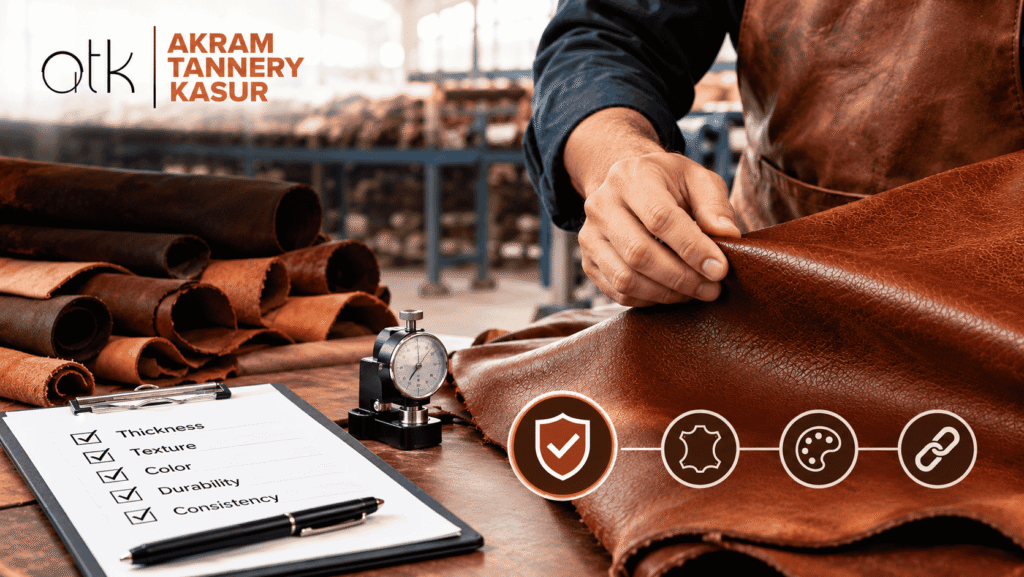
Finished leather is usually more consistent. Each hide has a similar color and surface, so your products look the same from batch to batch.
Crust leather can show more natural differences, such as marks, scars, or small shade changes. Finishing can hide some of these, but not all. Some brands love this natural look. Others want a perfect, even surface.
Winner for consistency: Finished leather.
6. Feel and Natural Character
Many leather lovers prefer the soft, natural feel of crust leather. It has not been covered by heavy coatings, so it can feel more open and breathable. It also develops a rich look over time, called patina.
Finished leather can feel smoother and slightly firmer because of the coating. Some heavy finishes can make the leather feel less natural.
Winner for natural feel: Crust leather.
Which One Is Better for Which Product?
The right choice depends on what you are making. Here is a simple guide.
Choose crust leather for:
- Premium handmade bags and wallets
- Shoes where you want custom colors
- Brands with their own finishing process
- Vegetable-tanned or artisan-style products
- Limited editions with a unique look
Choose finished leather for:
- Large-scale production with fast turnaround
- Furniture and car interiors
- Jackets and garments that need uniform color
- Products that need strong water and stain resistance
- Small businesses that do not have finishing tools
How to Decide: A Quick Checklist
Ask yourself these questions before you buy:
- Do I have finishing equipment or a finishing partner? If yes, crust leather is a strong option.
- How important is a unique color or texture? If very important, go with crust.
- How fast do I need to ship? If time is short, finished leather helps.
- Will the product face heavy wear or water? Finished leather offers built-in protection.
- What is my total budget? Count the finishing cost, not just the leather price.
Why Your Tannery Partner Matters
No matter which type you pick, quality starts at the tannery. A good tannery selects healthy raw hides, controls the tanning process, and checks each batch for thickness, softness, and strength.
Poor tanning leads to weak leather that cracks, fades, or smells bad. Good tanning gives you a strong base that works well in the factory and lasts for years in the customer’s hands.
When you choose a supplier, ask about their tanning methods, testing process, and ability to supply both crust and finished options. A tannery that offers both gives you more flexibility as your business grows. You can explore leather manufacturing solutions at Akram Tannery to see what a reliable supplier can offer.
Tips for Working With Each Type
Working with crust leather:
- Test small samples before dyeing a large batch
- Work with a trusted finishing partner
- Plan for extra time in your schedule
- Keep notes on color recipes so you can repeat them
Working with finished leather:
- Check the finish quality before cutting
- Use the right needles and adhesives for coated surfaces
- Store hides flat or rolled, away from heat and sunlight
- Order a little extra to cover natural flaws
Final Thoughts
There is no single winner in the crust leather vs. finished leather debate. Each one has strengths. Crust leather gives you freedom, a natural feel, and a custom look. Finished leather gives you speed, protection, and consistency.
Think about your product, your budget, your timeline, and your tools. Then pick the type that supports your goals. When in doubt, order samples of both and test them in your own process.
Ready to source quality leather for your next collection? Visit Akram Tannery to learn more and get started.
Frequently Asked Questions (FAQs)
What is the main difference between crust leather and finished leather?
Crust leather is tanned and dried but not fully finished. Finished leather has extra steps, such as final dyeing, coating, and polishing, so it is ready to use right away.
Is crust leather lower quality than finished leather?
No. Crust leather is not lower in quality. It is simply at an earlier stage. Its final quality depends on how well it is finished afterward.
Which is cheaper for manufacturers?
Crust leather usually costs less per piece, but you must pay for finishing later. Finished leather costs more upfront but saves time and extra work.
Can I dye crust leather any color I want?
Yes, in most cases. That is one of its biggest benefits. You can choose custom colors, patterns, and finishes to match your brand.
Is finished leather more durable?
Often, yes. The protective coating helps resist water, stains, and scratches. But well-finished crust leather can last just as long.