
The inside of a car is where drivers and passengers spend hours every week. Seats, steering wheels, door panels, and dashboards all get touched, pressed, and rubbed again and again. That is why picking the right automotive leather matters so much. Good leather makes a car feel comfortable and stylish. Poor leather can crack, fade, or wear out in just a few years.
In this guide, you will learn about the main types of car interior leather, the features to check before you buy, and how to pick a supplier you can trust. Whether you build cars, restore classic models, or run an upholstery shop, these tips will help you make a smart choice.
Why Leather Is Still the Top Choice for Car Interiors
Many new materials have come to market, but leather is still the first pick for premium cars. Here is why:
- It lasts a long time. Well-made leather can stay in good shape for 10 years or more.
- It feels better with age. Leather softens and fits the body over time.
- It is easy to clean. Most spills wipe off with a damp cloth.
- It adds value. Cars with leather seats often sell for more on the used market.
- It looks premium. Leather gives a rich, classy look that buyers love.
Still, not all leather is the same. The type, finish, and quality all change how it performs inside a car.
Know the Main Types of Automotive Leather
Full-Grain Leather
Full-grain leather keeps the whole top layer of the hide. It is the strongest and most natural type. It shows small marks and grain patterns that make each piece unique. Full-grain is a great choice for luxury cars and custom builds, but it costs more.
Top-Grain and Corrected-Grain Leather
Top-grain leather has its surface lightly sanded to remove flaws. Corrected-grain leather is sanded more and then given an embossed pattern. Both are smooth, even in color, and easier to keep clean. This is why most mass-market cars use them for car seat leather.
Nappa Leather
Nappa is a soft, smooth leather known for its buttery feel. Many high-end car brands use Nappa for seats and armrests. It is very comfortable, but it needs a good protective finish to resist wear.
Aniline, Semi-Aniline, and Pigmented Leather
These names describe how the leather is colored and protected:
- Aniline leather is dyed all the way through with no heavy top coat. It looks and feels natural, but it can stain and fade easily. You can see this style in our red aniline leather.
- Semi-aniline leather has a light protective coat. It keeps a natural feel but handles daily use much better.
- Pigmented leather has a strong surface coating. It is the toughest choice and resists spills, scratches, and sunlight.
For most cars, semi-aniline or pigmented finished leather gives the best balance of beauty and strength.
Nubuck and Suede-Style Finishes
Nubuck leather is buffed on the grain side to create a soft, velvet-like touch. It looks great on headliners, seat inserts, and steering wheels in sports cars. It gives good grip but needs more care than smooth leather.
Key Factors to Check Before You Buy
1. Durability and Abrasion Resistance
Car seats face constant rubbing from clothes, belts, and keys. Ask your supplier about rub tests and tear strength. Strong automotive upholstery leather should handle thousands of rub cycles without showing damage.
2. Heat, Sunlight, and UV Resistance
A parked car can get very hot inside. Sunlight through the windows can fade and dry out leather. Choose leather that is treated for UV and heat resistance. This keeps the color bright and stops cracking.
3. Breathability and Comfort
Nobody likes a sticky seat on a hot day. Perforated leather has tiny holes that let air flow through. It works well with heated and cooled seats. Natural leather also breathes better than most synthetic options.
4. Colorfastness
Colorfast leather does not rub off color onto clothes. This is very important for light-colored seats and dark jeans. Always ask for colorfastness test results.
5. Thickness
Most car seat leather is about 0.9 to 1.3 mm thick. Thinner leather is easier to stretch over curves, like steering wheels. Thicker leather is better for seats that take more wear. Match the thickness to the part you are covering.
6. Safety and Low Odor
Car interiors are closed spaces. Good automotive leather should meet fire-safety rules for vehicles. It should also have a low odor and release very little fog onto the windows. Ask your supplier which standards their leather meets.
Matching Leather to Each Part of the Car
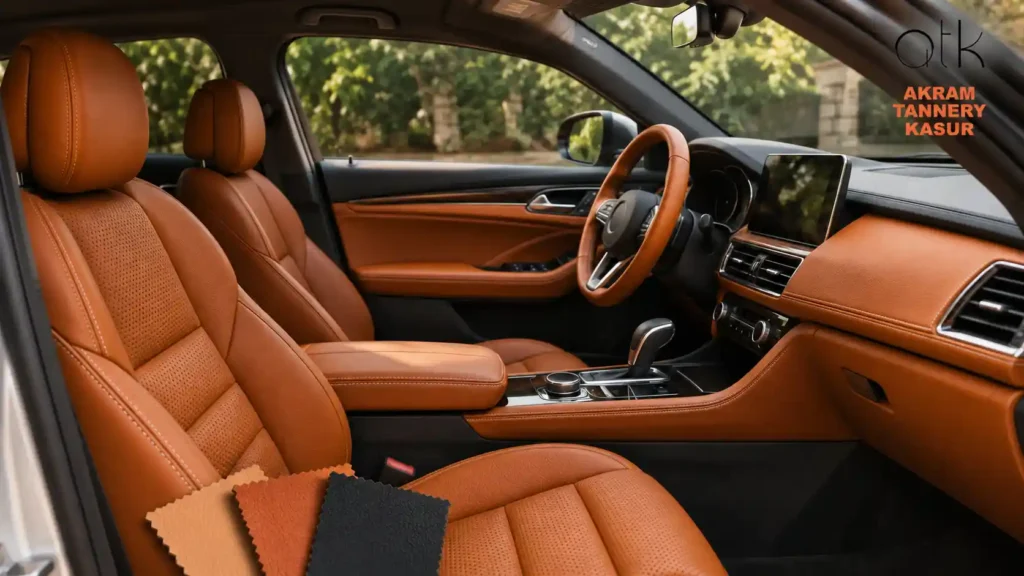
Different parts of the car need different kinds of leather:
| Car Part | Best Leather Choice | Why |
| Seats | Semi-aniline, pigmented, or Nappa | Strong, comfortable, easy to clean |
| Steering wheel | Thin Nappa or nubuck | Soft grip, easy to wrap |
| Door panels | Corrected-grain or embossed | Even look, resists scratches |
| Dashboard | Pigmented with UV protection | Faces the most sunlight |
| Headliner and inserts | Nubuck or perforated leather | Soft look and better airflow |
| Gear knob and armrests | Full-grain or Nappa | High-touch areas need a premium feel |
Finishes and Design Options
Today, car owners want interiors that stand out. Leather can be made in many styles:
- Embossed leather adds patterns like diamond, carbon fiber, or exotic textures.
- Woven leather creates a unique braided look for seat centers and panels.
- Digital printing lets you add custom designs, logos, or colors.
- Laminated leather offers extra strength and a uniform surface for heavy-use areas.
- Pull up leather gives a rich, vintage look that works well for classic car restorations.
These options help car makers and upholstery shops build interiors that match their brand or a customer’s style.
How to Choose a Reliable Leather Supplier
Even the best leather type will fail if the quality is poor. Here is what to look for in a supplier:
- Experience. A tannery with many years in business knows how to make leather that lasts. Read our story to see how Akram Tannery has grown since 1990.
- Quality control. The supplier should check every stage, from raw hide to final finish. Learn more in our guide on how modern tanneries maintain leather quality from start to finish.
- Custom options. Look for a partner who can match colors, thickness, and finishes to your needs.
- Samples. Always test samples before placing a large order.
- Export experience. A supplier who ships worldwide understands global standards and delivery timelines.
If you are buying semi-processed leather to finish in your own plant, read crust leather vs. finished leather to see which option suits your production line.
Caring for Automotive Leather
Even the best leather needs some care:
- Wipe seats with a soft, damp cloth each week.
- Use a pH-balanced leather cleaner, not household soap.
- Apply a leather conditioner every few months.
- Park in the shade or use a sunshade when you can.
- Clean spills right away so they do not soak in.
Simple care like this can add years to the life of your car interior leather.
Final Thoughts
Choosing the right leather for automotive interiors comes down to a few key points: the type of leather, its finish, how it handles heat and wear, and the supplier behind it. Semi-aniline and pigmented leathers work best for most seats. Nappa and nubuck add a luxury touch to high-touch areas. Special finishes like embossed or woven leather help your interior stand out.
At Akram Tannery, we produce high-quality upholstery leather and finished leathers for clients around the world. Ready to start your next project? Send us a leather request or contact our team today.
Frequently Asked Questions (FAQs)
What is the best leather for car seats?
Semi-aniline and pigmented leathers are the best for most car seats. They are soft, strong, and easy to clean. Nappa leather is a great pick for luxury cars.
How long does automotive leather last?
Good-quality automotive leather can last 10 to 15 years or more with regular cleaning and conditioning.
Is perforated leather a good choice for car seats?
Yes. Perforated leather lets air move through the seat. It keeps you cooler in summer and works well with heated and ventilated seats.
What is the difference between Nappa and regular leather?
Nappa is a soft, smooth, full-grain or top-grain leather with a very gentle feel. Regular car leather is often corrected-grain, which is tougher but less soft.
How thick should car seat leather be?
Most car seat leather is between 0.9 mm and 1.3 mm thick. Thinner leather suits steering wheels, while thicker leather suits seats.
Can I get custom colors and patterns for my car interior?
Yes. Many tanneries, including Akram Tannery, offer custom colors, embossing, digital printing, and woven designs. You can schedule a meeting to discuss your project.