
The leather industry is experiencing a transformation that would have seemed impossible just a decade ago. As environmental consciousness reshapes consumer choices and fashion brands race to meet sustainability goals, bio based leather has emerged from niche laboratories to become one of the fastest-growing segments in the materials market. This isn’t just about tree-huggers choosing canvas bags anymore; major luxury brands, automotive manufacturers, and fashion giants are betting billions on sustainable leather alternatives that promise to revolutionize how we think about leather.
The numbers tell a compelling story. The bio based leather market was valued at approximately $107 million in 2023 and experts project it will more than double to $216 million by 2028. Some analysts predict even more dramatic growth, with projections reaching over $1 billion by 2030. This explosive expansion isn’t happening in a vacuum; it’s driven by converging forces of consumer demand, environmental regulation, technological innovation, and a fundamental shift in how we view our relationship with animals and the planet.
Whether you’re a fashion designer exploring eco-friendly leather options, a manufacturer seeking sustainable materials, or simply someone curious about the future of fashion and furnishings, understanding this market transformation matters. Let’s explore why bio based leather is growing so rapidly and what it means for the future of sustainable materials.
What Makes Bio Based Leather Different
First, let’s clear up what we’re actually talking about. Bio based leather also called vegan leather, plant-based leather, or sustainable leather alternatives refers to leather-like materials made from renewable, natural sources instead of animal hides. But here’s where it gets interesting: these aren’t your grandmother’s vinyl or plastic “pleather” that cracked after a season. Modern bio based leather uses cutting-edge science to create materials that look, feel, and in some cases actually perform better than traditional leather.
Think of plant-based leather made from pineapple leaves, mushroom roots, cactus fibers, apple peels, cork, and even grape waste from wineries. These materials aren’t just creative recycling projects they’re scientifically engineered to replicate leather’s properties while slashing environmental impact.
The key difference between bio based leather and traditional animal leather comes down to production. Conventional leather requires raising cattle (which produces massive greenhouse gas emissions), slaughtering animals, and then tanning hides using chemicals that often pollute waterways. The leather industry is responsible for significant deforestation, water consumption, and chemical pollution.
Sustainable leather materials, by contrast, typically use agricultural waste products that would otherwise be discarded, grow in controlled environments with minimal water, and process using less toxic chemicals. Many bio based materials are also biodegradable, completing a circular loop that traditional leather never achieves.
The Environmental Case Driving Market Growth
Let’s talk about why sustainable leather isn’t just a feel-good trend but an environmental necessity. The traditional leather industry has a substantial environmental footprint that’s becoming increasingly unacceptable to consumers and regulators alike.
Cattle farming for leather is linked to Amazon deforestation. Tanneries discharge chromium and other toxic chemicals into rivers. The process consumes enormous amounts of water, it takes about 17,000 liters of water to produce just one kilogram of leather. The carbon footprint is substantial too, with livestock contributing significantly to greenhouse gas emissions.
Enter eco-friendly leather alternatives. Consider mushroom leather grown from mycelium. The production happens in controlled indoor facilities using agricultural waste like sawdust. No animals, no massive land use, no deforestation. The mycelium grows into leather-like sheets in just days or weeks rather than the months or years required to raise cattle.
Pineapple leather, marketed under brands like Piñatex, uses fibers from pineapple leaves a waste product from fruit farming. Filipino pineapple farmers earn additional income from leaves they’d normally burn or compost. The material requires no extra land, water, or pesticides because it’s derived from existing agriculture.
Cactus leather thrives in arid climates with minimal water. Apple leather repurposes waste from apple juice and cider production. Cork leather comes from tree bark that regenerates, making it completely renewable.
These innovations aren’t marginal improvements they represent quantum leaps in sustainability. Studies show bio based leather can reduce carbon emissions by 80-90% compared to conventional leather. Water usage drops by similar percentages. Chemical pollution decreases dramatically.
This environmental advantage is translating directly into market growth as brands face pressure from consumers, investors, and regulators to reduce their environmental impact.
Consumer Demand Fuels Sustainable Leather Growth
Walk into any major fashion retailer today and you’ll see vegan leather options prominently displayed. This isn’t accident it’s a response to surging consumer demand for cruelty-free materials and sustainable fashion.
The vegan population has exploded globally. In the United States, about 6% of the population identifies as vegan, with younger generations showing even higher percentages. But here’s the crucial point: you don’t need to be vegan to prefer cruelty-free leather alternatives. Growing numbers of consumers who still eat meat are choosing plant-based leather for accessories, footwear, and furniture because they’re uncomfortable with the leather industry’s animal welfare record.
Social media has accelerated this shift. Documentaries and influencers expose leather production realities, making many consumers reconsider their purchases. When customers learn about the environmental and ethical issues surrounding traditional leather, sustainable alternatives become increasingly attractive.
Millennials and Gen Z consumers, who now represent the largest consumer segments, consistently prioritize sustainability in purchase decisions. Studies show these demographics will pay premium prices for eco-friendly products. They research brands’ sustainability credentials before buying and aren’t afraid to call out greenwashing.
This generational shift is reshaping the entire leather market. Brands that ignore sustainability trends risk losing relevance with tomorrow’s primary consumers. Smart companies are investing heavily in bio based materials to future-proof their businesses.
Fashion Industry Embraces Plant-Based Leather
The fashion world’s adoption of sustainable leather is perhaps the most visible driver of market growth. When luxury brands and fast fashion giants alike embrace bio based alternatives, it signals a fundamental industry transformation.
Stella McCartney, the pioneering sustainable luxury brand, has championed vegan leather since its founding. The brand partnered with Bolt Threads to develop and commercialize Mylo, a mushroom leather made from mycelium. In 2022, Stella McCartney launched luxury bags made entirely from Mylo, proving plant-based leather could meet luxury market standards.
Hermès, synonymous with ultra-luxury leather goods, shocked the industry by partnering with MycoWorks to create the Victoria bag using Sylvania, their exclusive mycelium leather. When a brand famous for crocodile and ostrich leather embraces bio based alternatives, it validates the entire sustainable materials movement.
Adidas developed Stan Smith sneakers using Mylo. Lululemon incorporated mushroom leather into limited edition accessories. H&M launched collections featuring Piñatex pineapple leather. These aren’t obscure experimental projects, they’re mainstream products reaching millions of consumers.
The footwear segment represents the largest application for bio based leather, and it’s easy to understand why. Shoes require durable, flexible materials that withstand constant wear. The fact that vegan leather alternatives now meet these demands while offering sustainability benefits makes them ideal for footwear manufacturers.
Fashion accessories, bags, wallets, belts represent another booming application. These items are highly visible, making them perfect vehicles for brands to showcase their sustainability commitments. A consumer carrying a bag made from cactus leather or apple leather makes a statement about their values.
Even garments and apparel increasingly incorporate bio based leather. Jackets, pants, and tops made from sustainable materials are moving from fringe fashion to mainstream collections.
Types of Bio Based Leather Dominating the Market
The bio based leather market isn’t monolithic, it encompasses diverse materials, each with unique properties and applications. Understanding these different types of sustainable leather helps explain the market’s complexity and growth potential.
Mushroom Leather: The Mycelium Revolution
Mushroom leather, technically made from mycelium (the root structure of fungi), has captured tremendous attention and investment. Companies like MycoWorks and Bolt Threads have raised hundreds of millions of dollars to scale production.
Mycelium leather grows in controlled environments on agricultural waste substrates like sawdust. The mycelium forms dense, fibrous mats that can be harvested in weeks. After processing, the material exhibits leather-like properties supple, durable, and customizable in thickness and texture.
The appeal of mushroom-based leather extends beyond sustainability. Mycelium can be grown into specific shapes, potentially reducing manufacturing waste. The material is naturally antimicrobial. And unlike conventional leather, production doesn’t depend on animal agriculture’s variables and limitations.
Major brands partnering with mycelium leather producers signals strong growth potential. However, challenges remain around scaling production to commercial volumes and achieving price parity with conventional leather.
Pineapple Leather: Agricultural Waste Transformed
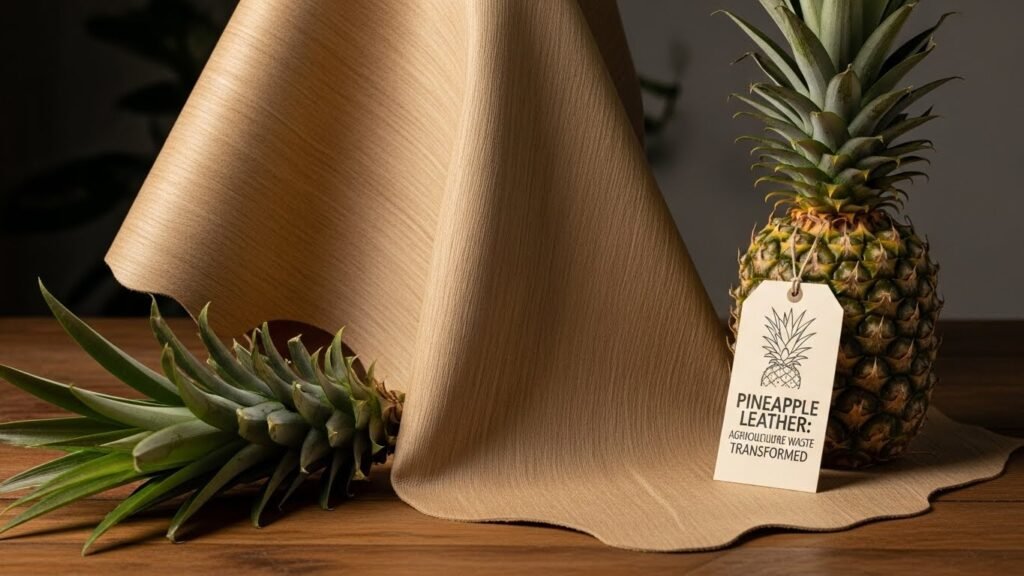
Pineapple leather, best known through the Piñatex brand, exemplifies how bio based leather can create circular economy benefits. The material uses fibers extracted from pineapple leaves typically burned or left to rot after harvest.
Filipino farmers partnering with Piñatex earn additional income from waste material. The fibers are processed into a non-woven mesh, then finished to create a leather-like textile. The result is lightweight, breathable, and has a distinctive texture that many designers find appealing.
Pineapple-based leather is projected to be one of the fastest-growing segments in the bio based leather market. Its combination of sustainability credentials, ethical sourcing, and fashion appeal makes it attractive across multiple applications from footwear to accessories to upholstery.
Cactus Leather: Desert Innovation
Cactus leather, developed by companies like Desserto, represents another innovative plant-based alternative. Made from Nopal cactus grown in Mexico, this material requires minimal water compared to conventional leather or even some other bio based alternatives.
The cactus is harvested without killing the plant, mature leaves are cut and the plant continues growing. Processing transforms the cactus into flexible, durable material suitable for fashion products, automotive interiors, and furniture upholstery.
Cactus-based leather appeals particularly to brands seeking materials suited to arid climates and water-scarce regions. As climate change intensifies water scarcity concerns, materials that thrive with minimal irrigation gain strategic importance.
Cork Leather: Renewable Tree Bark
Cork leather offers unique advantages as a sustainable material. Harvested from cork oak trees without harming them, cork bark regenerates completely. This makes cork genuinely renewable, the same trees can be harvested repeatedly over their 200-year lifespans.
The cork segment dominated the bio based leather market with significant market share in 2024, valued at over $180 million. Cork’s natural water resistance, lightweight properties, and distinctive appearance make it popular for accessories, footwear, and home furnishings.
Portugal, which produces most of the world’s cork, has strict sustainability regulations protecting cork forests. This means cork leather comes with inherent sustainability certifications and transparent supply chains.
Apple Leather and Fruit-Based Alternatives
Apple leather and similar fruit-based materials turn food industry waste into fashion. Apple waste from juice and cider production is processed into pulp, mixed with binding agents, and formed into leather-like sheets.
Brands like Fruitleather Rotterdam pioneer this approach, demonstrating how bio based leather can address both material needs and waste management challenges. The materials are biodegradable, smell naturally pleasant, and tell compelling stories that resonate with eco-conscious consumers.
While currently smaller market segments, leftover fruit-based leathers offer virtually unlimited raw material potential as long as we continue producing fruit products.
Automotive Industry Drives Innovation
When most people think of sustainable leather, they picture fashion. But the automotive sector represents enormous growth potential for bio based materials. Cars contain substantial leather seats, steering wheels, gear shifts, door panels, dashboards, and automakers are under intense pressure to reduce environmental impact.
General Motors, BMW, Mercedes-Benz, and other major manufacturers are exploring bio based leather alternatives for vehicle interiors. GM specifically partnered with MycoWorks to develop mycelium leather for automotive applications. These aren’t just sustainability experiments, automakers need materials that meet strict durability, safety, and performance standards.
Automotive leather must withstand temperature extremes, UV exposure, abrasion, and repeated use over vehicle lifetimes potentially exceeding a decade. The fact that sustainable leather alternatives are now being considered for these demanding applications demonstrates how far the technology has advanced.
The automotive interior segment follows closely behind footwear as a top-performing application for bio based leather. As electric vehicle adoption accelerates and automakers emphasize their environmental credentials, demand for sustainable interior materials will likely grow even faster.
Furniture and Home Furnishings Applications
The furniture segment represents another significant growth area for bio based leather. Sofas, chairs, ottomans, and other upholstered furniture traditionally use either genuine leather or petroleum-based synthetic alternatives. Plant-based leather offers a third option that appeals to environmentally conscious consumers.
Home furnishing applications benefit from bio based leather’s breathability compared to vinyl or PU leather. Furniture covered in materials like cork leather or mushroom leather stays cooler and more comfortable than plastic alternatives. The materials also tend to develop attractive patinas over time, similar to traditional leather.
Luxury furniture brands like Ligne Roset have partnered with MycoWorks to incorporate mycelium leather into high-end furniture collections. This validates bio based materials for applications where durability and aesthetics are paramount.
As consumers spend more time evaluating the environmental impact of home furnishings, sustainable upholstery materials become increasingly important purchase factors.
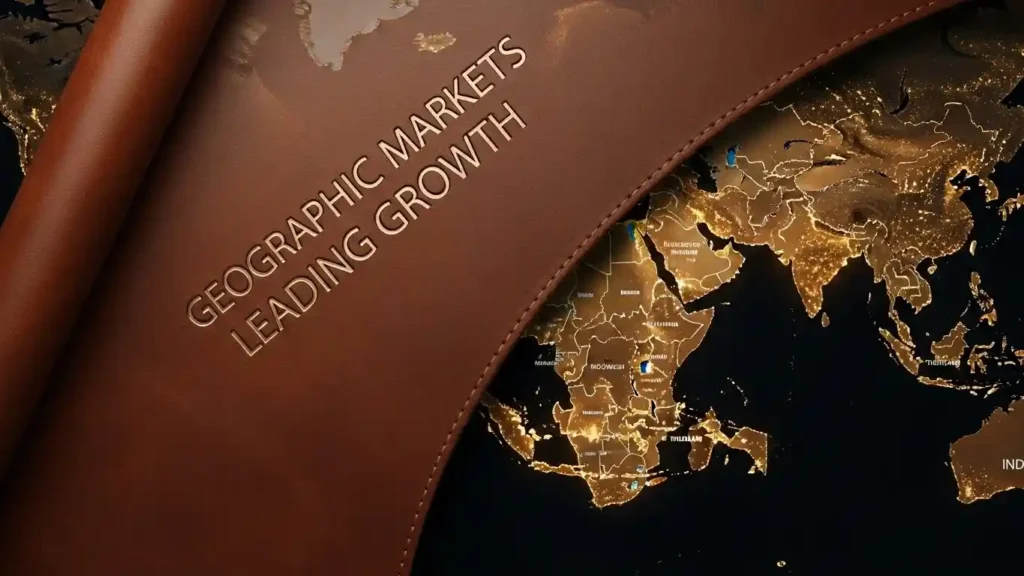
Geographic Markets Leading Growth
The bio based leather market shows interesting geographic patterns that illuminate different drivers and opportunities across regions.
North America currently leads the market, valued at over $120 million in 2024. The United States drives this dominance through robust research and development, venture capital investment in sustainable materials startups, and strong consumer awareness of environmental issues. American companies like Bolt Threads, MycoWorks, and Ecovative are pioneering commercial bio based leather production.
Europe represents the second-largest market, expected to reach $54.5 million by 2025. European leadership stems from stringent environmental regulations, government support for circular economy initiatives, and a robust fashion industry committed to sustainability. Countries like Germany, France, Italy, and the Netherlands lead European adoption.
The European Union’s regulatory framework incentivizes sustainable materials through carbon pricing, waste reduction mandates, and sustainability labeling requirements. These policies create favorable conditions for bio based leather market expansion.
Asia Pacific is emerging as the fastest-growing regional market. China, India, Japan, and South Korea are investing heavily in green technologies and sustainable manufacturing. China’s market alone is projected to reach over $20 million by 2025.
South Korea specifically is becoming a hotspot for bio based materials innovation, driven by tech-savvy consumers, government support for carbon neutrality, and strong fashion industry interest in vegan alternatives.
India offers unique opportunities, combining large-scale traditional leather production expertise with growing environmental consciousness. The transition from conventional to bio based leather could position India as a major producer of sustainable materials.
Latin America and the Middle East & Africa currently represent smaller market shares but show potential for rapid growth as environmental awareness increases and fashion trends drive adoption.
Technology and Innovation Accelerating Market Growth
The rapid advancement of biotechnology and material science underpins the entire bio based leather market’s growth trajectory. Innovations happening in laboratories today will define the industry’s future.
Cellular agriculture represents one frontier. Companies are developing genuine leather grown from animal cells without raising or slaughtering animals. This lab-grown leather maintains the collagen structure of traditional leather while eliminating the environmental and ethical concerns. While still emerging, cell-based leather could eventually offer identical properties to conventional leather at a fraction of the environmental cost.
Microbial fermentation offers another promising approach. By engineering microorganisms to produce collagen or other proteins, companies can “brew” leather-like materials in bioreactors. This process resembles how insulin or brewing beer works controlled, scalable, and potentially very sustainable.
Advanced biotech integration is creating next-generation bio based materials with enhanced performance characteristics. Through material science innovations, developers are improving strength, flexibility, water resistance, and durability of plant-based leather to match or exceed conventional leather properties.
Nanotechnology applications help improve bio based leather performance. Nano-coatings can enhance water resistance without harmful chemicals. Nanofiber integration can strengthen materials without adding significant weight.
Digital manufacturing technologies like 3D printing may soon enable custom bio based leather production. Imagine ordering shoes with perfectly fitted mushroom leather uppers printed to exact specifications.
The research and development investments flowing into sustainable materials are substantial. Venture capital firms have poured hundreds of millions into bio based leather startups. Companies like Natural Fiber Welding, Modern Meadow, Beyond Leather Materials, and others continue innovating and attracting investment.
Strategic partnerships between material innovators and established brands accelerate development. When Hermès or Adidas partners with a startup, it provides not just capital but also industry expertise, testing capabilities, and guaranteed market access.
Challenges Facing the Bio Based Leather Market
Despite explosive growth projections, the bio based leather market faces real challenges that could slow adoption or limit long-term success.
Production costs remain significantly higher than conventional leather for many bio based alternatives. While economies of scale should reduce costs as production increases, sustainable leather currently commands premium prices. This limits adoption for price-sensitive consumers and mass-market applications.
Scalability presents major hurdles. Growing enough mycelium leather or pineapple leather to replace even a small percentage of conventional leather requires massive production expansion. Building commercial-scale facilities demands substantial capital investment and time.
Some bio based leather companies have struggled with this challenge. Bolt Threads, after raising over $300 million and launching Mylo with major brand partners, halted production in 2023 citing difficulty securing additional funding in a challenging economic climate. While MycoWorks and others continue operating, Bolt’s troubles illustrate the financial challenges of scaling sustainable materials production.
Performance limitations still affect some bio based alternatives. While improving rapidly, not all plant-based leathers match conventional leather’s durability, water resistance, or longevity. Applications with demanding performance requirements may still favor traditional leather until bio based options achieve full parity.
Consumer awareness and education gaps persist. Many consumers remain unfamiliar with bio based leather options or confused about their properties. Terms like vegan leather can encompass everything from mushroom leather to cheap plastic, creating confusion that hinders market growth.
Regulatory and certification standards are still developing. Unlike conventional leather’s well-established grading and quality standards, bio based materials lack universal benchmarks. This makes it difficult for buyers to evaluate different products and for manufacturers to demonstrate their materials meet specific requirements.
Greenwashing concerns also affect the market. Some products marketed as sustainable leather alternatives contain significant synthetic components or use environmentally harmful processes. This erodes consumer trust and makes legitimate bio based leather producers’ work harder.
Future Outlook: Market Projections and Trends
Looking ahead, the bio based leather market appears poised for continued rapid expansion. Multiple converging trends suggest growth will accelerate rather than slow.
Market projections vary, but most analysts forecast substantial increases. Conservative estimates project the market reaching $216-250 million by 2028-2030. More optimistic projections suggest the market could exceed $1 billion by 2030 and continue expanding to over $22 billion by 2032 as production scales and costs decline.
These growth rates typically 11-15% compound annual growth rates far exceed traditional leather market growth, indicating sustainable alternatives are capturing increasing market share.
Several trends will likely shape the market’s evolution:
Improved material performance as biotechnology advances will make bio based leather suitable for more applications. Materials that today work well for accessories but struggle in demanding uses like automotive or footwear will improve to meet those requirements.
Cost reductions through economies of scale will make sustainable leather competitive with conventional leather on price, not just environmental credentials. This is the inflection point that could trigger mass adoption.
Regulatory pressure will likely intensify. Governments implementing carbon taxes, sustainability reporting requirements, and circular economy mandates will favor bio based materials over conventional leather. The European Union’s environmental regulations provide a preview of policies other regions may adopt.
Brand commitments to sustainability will drive demand. Major fashion brands have announced targets to eliminate conventional leather or achieve carbon neutrality. These pledges create guaranteed demand for sustainable alternatives.
Technology breakthroughs in areas like lab-grown leather or cellular agriculture could dramatically reshape the landscape. Materials that perfectly replicate conventional leather without its drawbacks would be game-changers.
Circular economy integration will become standard. Bio based leather that’s biodegradable or recyclable fits circular economy models better than conventional leather. As circular economy adoption increases, sustainable materials gain competitive advantages.
Consumer acceptance will continue growing, especially among younger demographics. As Millennials and Gen Z gain purchasing power, their sustainability preferences will increasingly drive market dynamics.
How Traditional Tanneries Can Adapt
For traditional leather manufacturers and tanneries, the rise of bio based alternatives isn’t necessarily an existential threat, it’s an opportunity to evolve and participate in the sustainability transformation.
Forward-thinking tanneries are exploring how their expertise in processing, finishing, and working with natural materials can transfer to bio based leather. The skills needed to transform mycelium mats or pineapple fibers into finished products overlap significantly with traditional leather processing.
Some established leather companies are investing in or partnering with bio based materials startups. This hedging strategy allows them to maintain traditional business while developing expertise in emerging materials.
Tanneries can also improve conventional leather’s sustainability profile. While bio based alternatives grow, traditional leather isn’t disappearing overnight. Implementing cleaner tanning methods, sourcing hides responsibly, and improving transparency can help conventional leather remain competitive.
The expertise of companies like Akram Tannery specialists in producing high-quality leather with attention to craftsmanship and material science positions them well to participate in the sustainable leather revolution. Understanding traditional leather’s properties provides insights into what bio based materials must achieve to succeed.
Frequently Asked Questions About Bio Based Leather
What is bio based leather made from?
Bio based leather is made from renewable natural sources instead of animal hides. Common materials include mushroom mycelium, pineapple leaf fibers, cactus, apple waste, cork, and other plant-based materials. These materials are processed to create leather-like properties including flexibility, durability, and texture while offering environmental benefits over conventional leather production.
How does bio based leather compare to real leather in quality?
Modern bio based leather increasingly matches or exceeds traditional leather in many properties. Premium mushroom leather and plant-based alternatives now offer comparable durability, texture, and appearance to conventional leather. Some applications like automotive interiors and luxury fashion successfully use bio based materials. However, performance varies by material type and manufacturing quality, with some bio based leathers still developing to match traditional leather across all use cases.
Is vegan leather the same as bio based leather?
Not always. “Vegan leather” simply means any leather alternative without animal products, which includes both bio based materials like mushroom or pineapple leather AND synthetic materials like polyurethane or PVC made from petroleum. Bio based leather specifically refers to materials derived from renewable biological sources. True bio based leather is both vegan and sustainable, while some vegan leathers are simply plastic alternatives.
Why is the bio based leather market growing so fast?
The market is growing due to converging factors: increasing consumer demand for sustainable and cruelty-free products, fashion brands committing to environmental goals, technological advances making bio based materials more viable, regulatory pressure favoring sustainable materials, and growing awareness of conventional leather’s environmental impact. Younger consumers especially prioritize sustainability, driving brands to adopt bio based alternatives at accelerating rates.
What are the main challenges facing bio based leather?
Key challenges include higher production costs compared to conventional leather, difficulty scaling production to meet demand, capital requirements for building commercial-scale facilities, some performance limitations in demanding applications, consumer education gaps about these new materials, and lack of standardized quality certifications. Companies are actively working to address these challenges through technological innovation and production scale increases.
Which industries use bio based leather the most?
The footwear segment is the largest market for bio based leather, followed by fashion accessories like bags and wallets, apparel and garments, automotive interiors, and furniture upholstery. Major brands across all these industries from Adidas and Stella McCartney in fashion to General Motors in automotive are incorporating bio based leather into their products as sustainable alternatives to conventional leather.
Is bio based leather actually better for the environment?
Yes, substantially. Bio based leather typically reduces carbon emissions by 80-90% compared to conventional leather, uses dramatically less water, requires no animal agriculture (eliminating associated deforestation and methane emissions), often uses agricultural waste that would otherwise be discarded, and involves fewer toxic chemicals in processing. Many bio based leathers are also biodegradable, unlike plastic leather alternatives. The environmental advantages are significant and measurable.
How much does bio based leather cost compared to regular leather?
Bio based leather currently costs more than conventional leather, though prices vary widely depending on the material type and quality. Premium mushroom leather can cost 2-3 times more than traditional leather, while some plant-based options offer closer price parity. However, costs are expected to decrease significantly as production scales up and technology improves, potentially reaching cost parity with conventional leather within the next 5-10 years.
Partner with Leather Experts for Your Sustainable Future
The transformation toward sustainable materials is reshaping the entire leather industry. Whether bio based alternatives or improved conventional leather, the future clearly favors materials that minimize environmental impact while delivering quality and performance.
At Akram Tannery, we’ve built our reputation on understanding leather at the deepest level, the science of tanning, the art of finishing, and the expertise required to produce materials that meet exacting standards. This foundation positions us perfectly to navigate the industry’s evolution toward sustainability.
We understand that traditional leather isn’t disappearing overnight, but the market is undeniably shifting. Our commitment is to provide our partners with insights, quality materials, and the expertise needed to make informed decisions about their leather sourcing, whether that means accessing premium traditional leather processed with enhanced sustainability practices or exploring emerging alternatives.
The leather industry’s future will be defined by those who adapt, innovate, and maintain unwavering quality standards while embracing sustainability. Our expertise in upholstery leather, vegetable tanned leather, and specialized finishes represents decades of material science knowledge that remains relevant regardless of how raw materials evolve.
Ready to discuss your leather needs in this changing landscape? Whether you’re exploring sustainable options, seeking premium traditional leather, or simply want to understand how market trends might affect your business, we’re here to provide the expertise and quality that have defined Akram Tannery for generations.
Visit akramtannery.com today to explore our materials, discuss your specific requirements, or learn how we can support your journey toward more sustainable leather solutions. In a rapidly evolving market, partner with experience, quality, and expertise you can trust.