
High-quality finished leather is genuine animal hide that has been tanned, treated, and surface-coated to achieve a consistent colour, texture and protective finish ready for end-use manufacturing.
It serves as the primary material in furniture upholstery, fashion garments, handbags, footwear, and automotive interiors. The finishing process directly determines how the leather looks, how long it lasts, and how well it performs in specific applications.
Finished leather can vary significantly, from full-grain top-coat leather used in luxury sofas to corrected-grain leather engineered for high-abrasion automotive seats. Knowing what separates poor quality from premium starts with understanding four core factors: grain type, finishing method, durability characteristics, and supplier certifications.
Most buyers struggle to identify quality leather before placing bulk orders. Akram Tannery’s specialists assess and match leather grades for your exact application. Explore our Finished Leather.
What Is the Leather Grain and Why Does It Matter?
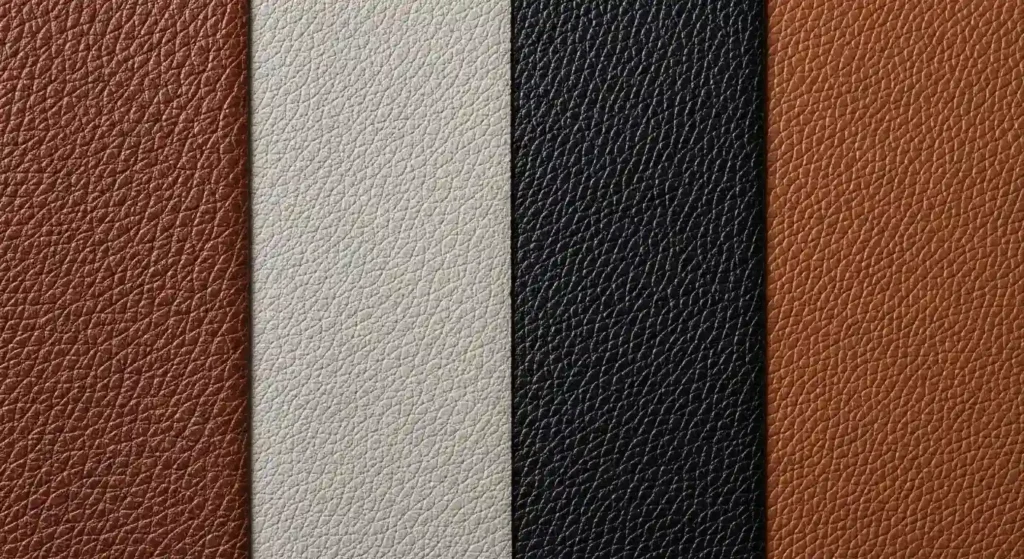
Grain refers to the layer of the hide used and how it has been processed. It is the single most important indicator of leather quality because it determines natural strength, breathability, and aging characteristics.
Full-grain leather retains the complete outer surface of the hide with no buffing or correction. It shows natural markings, develops a patina over time, and is the strongest and most durable grade available. It is the first choice for premium furniture and high-end fashion.
Top-grain leather has the surface lightly sanded to remove blemishes, then a finish coat is applied. It is thinner and more pliable than full-grain but still high quality. Most commercial upholstery and fashion leather falls in this category.
Corrected-grain leather undergoes heavy surface buffing to remove imperfections, then receives an embossed pattern and heavy pigment coating. It offers lower cost and consistent appearance, commonly used in automotive seating and budget furniture.
Bonded or split leather is not a finished leather grade for serious manufacturing. It is recycled fiber or the inner hide layer and has minimal durability. Avoid sourcing it for any structural or long-term application.
Quick Grain Comparison
| Grain Type | Surface | Best Use | Durability |
| Full-Grain | Unaltered | Luxury furniture, fashion | Highest |
| Top-Grain | Light buff | Commercial upholstery | High |
| Corrected-Grain | Heavy buff + emboss | Automotive, budget furniture | Medium |
| Split Leather | Fiber/backing | Not recommended | Low |
How Does the Finishing Process Affect Leather Quality?
The finishing process is the final stage of tannery production where color, texture, and protective coatings are applied to the hide surface. It directly determines how the leather responds to light, moisture, abrasion, and daily use.
Aniline finishing uses transparent dye with no surface coating. It preserves the natural grain, softness, and feel of the hide but offers minimal protection against staining and moisture. It is suited for luxury furniture in controlled environments.
Semi-aniline finishing applies a thin protective coat over the dye, balancing the natural appearance with added durability. It works well across furniture, fashion, and footwear applications where aesthetics and practicality must coexist.
Pigmented or protected finishing uses an opaque polymer coating over a heavily pigmented base. It creates a very uniform appearance, is highly resistant to stains and wear, and is the standard choice for automotive interiors and commercial seating.
What Should You Check in the Finishing Quality of Leather?
Run your hand across the surface. Premium finishing feels smooth without tackiness. Press your thumb into the leather and release. A high-quality finish should recover without cracking or creasing permanently. Hold it under direct light and check for uniform color distribution and consistent sheen. Inconsistent patches or coating peel at the edges are signs of poor manufacturing.
What Durability Tests Should You Evaluate Before Buying Leather?
Durability in finished leather is measured through standardized tests that simulate wear conditions in the target application. A supplier offering quality leather should be able to provide test results, not just claims.
Rub fastness measures how well the surface color holds under repeated friction. Automotive leather requires a minimum rub fastness rating of 4 to 5 on the AATCC scale. Furniture and fashion leather should meet a minimum of 3.5.
Tensile strength indicates how much force the hide can withstand before tearing. For upholstery and seating applications, look for a minimum tensile strength of 200 N/cm2. This matters most for high-use areas like seat bolsters and sofa armrests.
Flex resistance tests how the leather performs under repeated bending without cracking. Fashion leather used in bags, jackets, and footwear should pass a minimum of 50,000 flex cycles without surface damage.
Moisture and stain resistance are critical for furniture and automotive leather. Ask for results from the DIN EN ISO 11642 standard on lightfastness and ISO 15700 on stain resistance. Leather failing these tests will degrade quickly in real-world use.
See how Akram Tannery produces finished leather built for high-demand manufacturing. Explore our upholstery and automotive leather grades at akramtannery.com/upholstery-leather/ and akramtannery.com/finished-leather/
Which Certifications Confirm High Quality Finished Leather?
Certifications are the most reliable external signal of a tannery’s manufacturing standards. They verify that the leather has been tested against internationally recognized benchmarks for quality, safety, and environmental responsibility.
REACH Compliance
REACH is the European Union’s regulation on chemicals. Leather supplied into the EU, or used in products sold there, must be REACH compliant. This ensures no restricted substances, including heavy metals, azo dyes, or formaldehyde, exceed permitted levels. Ask for a test report confirming REACH compliance before approving any European market order.
Oeko-Tex Leather Standard
The Oeko-Tex Leather Standard 100 certifies that every component of the leather has been tested for harmful substances. It is recognized globally across fashion, footwear, and children’s products. It builds immediate trust with end-consumer brands sourcing from you.
ISO 9001 Quality Management
A tannery holding ISO 9001 certification operates under a documented quality management system. This means consistent production processes, traceability, and regular audits. It reduces the risk of batch-to-batch variation, which is a major issue in volume leather sourcing.
LWG (Leather Working Group) Audit
The LWG audit is the leather industry’s most respected environmental and quality benchmark. It evaluates water usage, chemical management, traceability, and manufacturing standards. Gold-rated and Silver-rated suppliers are considered reliable partners by global brands in fashion and automotive manufacturing.
How to Choose Finished Leather for Furniture, Fashion, and Automotive?
For Furniture Manufacturing
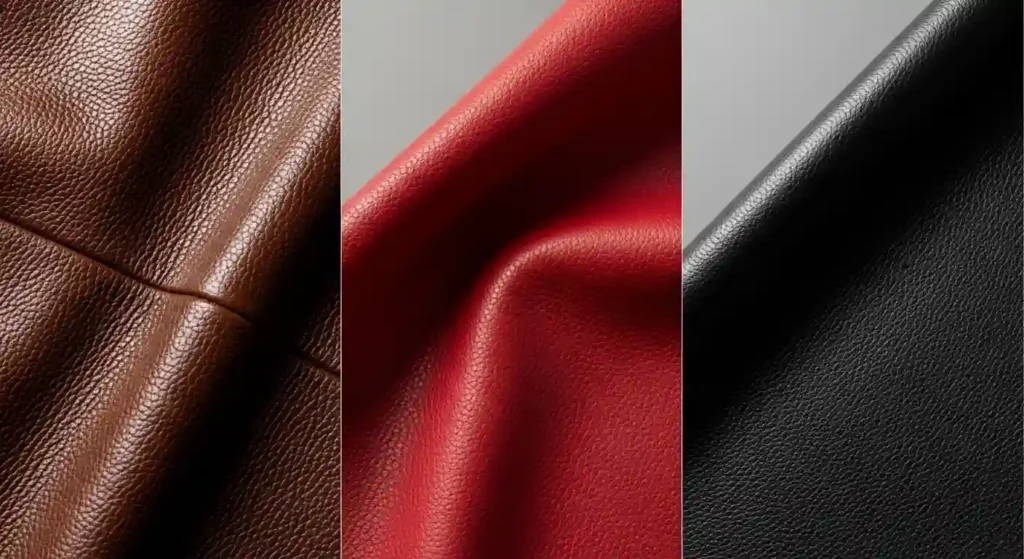
Furniture leather must balance softness, durability, and consistent color across large surface areas. Full-grain or top-grain leather with a semi-aniline or pigmented finish is the most practical choice. Specify a minimum thickness of 1.0mm to 1.4mm for sofas and 0.8mm to 1.0mm for dining chairs. Demand rub fastness and tensile strength test reports. Request a leather sample in your target color under both natural and artificial light before approval.
For Fashion and Garments
Fashion leather must be lightweight, flexible, and consistent in drape. Nappa and lamb leather in full-grain or top-grain grades are standard. Surface finish should feel soft without tackiness. For outerwear and bags, target a thickness of 0.8mm to 1.2mm. Verify flex resistance above 50,000 cycles and ensure dyes are azo-free to meet global retail compliance requirements.
For Automotive Interiors
Automotive leather is the most technically demanding application. It must withstand UV exposure, repeated flex, temperature extremes, and passenger abrasion. Corrected-grain leather with a heavy pigmented finish is the industry standard. Minimum rub fastness of 4.5 on wet and dry tests is non-negotiable. Specify heat resistance up to 100 degrees Celsius minimum. Work with tanneries that hold LWG certification and can provide full traceability from hide to finished hide.
Ready to source finished leather that meets your exact quality standard? Akram Tannery has supplied premium leather to furniture, fashion, and automotive manufacturers for over 30 years. Submit a leather request at akramtannery.com/leather-request/ or schedule a meeting at akramtannery.com/scheduled-a-meeting/
Frequently Asked Questions
Full-grain leather keeps the complete outer hide surface intact with no buffing, making it the strongest and most natural grade. Top-grain leather is lightly sanded to remove surface flaws and receives a finish coat. Both are high quality, but full-grain is considered premium and develops a richer patina over time.
Full-grain or top-grain leather with a semi-aniline or pigmented finish is best for furniture. It offers the right combination of softness, durability, and consistent color. A minimum thickness of 1.0mm to 1.2mm is recommended for upholstered seating to prevent premature wear.
Request a physical sample and check surface smoothness, color consistency under different lighting, and thumb-press recovery. Ask the supplier for rub fastness, tensile strength, and flex resistance test reports. Confirm that REACH compliance or Oeko-Tex certification is available before placing volume orders.
Look for REACH compliance for any EU-market supply, Oeko-Tex Leather Standard 100 for fashion and children’s products, ISO 9001 for quality management consistency, and an LWG audit rating for environmental and traceability assurance. Gold or Silver LWG ratings are the industry benchmark for responsible sourcing.
Yes. Corrected-grain leather with a heavy pigmented finish is the standard grade for automotive interiors. It provides a uniform appearance, high rub fastness, and resistance to temperature and UV exposure. Ensure the supplier can provide test data meeting automotive OEM specifications for wet and dry abrasion resistance.
Fashion garments and handbags typically use leather between 0.6mm and 1.2mm, depending on the product. Jackets and outerwear use 0.8mm to 1.0mm. Bags and accessories can go up to 1.2mm for structural pieces. Thinner leather should be tested for tear resistance to ensure it can withstand the stress of production and daily use.
About Akram Tannery: Akram Tannery is a premium leather manufacturer based in Kasur, Pakistan, with over 30 years of experience supplying finished leather to global furniture, fashion, and automotive manufacturers. The tannery exports to the United States, the United Kingdom, the UAE, Canada, Australia, and across Europe. Visit akramtannery.com to explore product ranges or submit a leather sourcing request.