
Crust leather is semi-processed leather that has been tanned but not yet finished. It sits at a critical stage in the leather supply chain, past the tannery process but not yet ready for final use. How you store it between these two stages determines whether your end product meets quality standards or arrives at production with cracks, mold or irreversible damage.
What Is Crust Leather and Why Proper Storage Matters
Crust leather, also called semi-finished leather or unfinished leather, has completed the tanning process but has not received its final surface coating. It may be dyed crust leather in various colors or left in its natural state, depending on the intended end use.
Finished leather has a protective topcoat that shields it from moisture and environmental stress. Crust leather has no such protection, making it far more vulnerable to humidity shifts, fungal growth, drying, and physical damage during storage.
Risks of improper storage include mold and mildew on hides, surface cracking from moisture loss, brittleness that makes leather unusable, insect damage, and grade degradation that reduces production value. Proper leather preservation before manufacturing directly protects your inventory and ensures quality consistency before production begins.
What are the ideal temperatures and Humidity for Crust Leather Storage?
Store crust leather at 15°C to 25°C with relative humidity between 50% and 65%. These conditions prevent both drying and moisture-related damage. Temperature control in leather storage is one of the most important environmental factors. Fluctuating temperatures accelerate material deterioration and cause hides to age unevenly.
- Recommended temperature: 15°C to 25°C (59°F to 77°F). Avoid spaces that drop below 10°C or rise above 30°C.
- Recommended humidity: 50% to 65% relative humidity. Use a calibrated hygrometer to monitor consistently.
- Effects of excessive moisture: Humidity above 70% promotes mold, mildew, and fungal growth, weakening fiber structure and staining surfaces.
- Effects of low humidity: Dry storage conditions below 40% RH cause leather to lose natural oils, leading to stiffness and cracking before hides reach the production floor.
How Should a Crust Leather Storage Environment Be Set Up?
A proper leather storage facility actively controls the conditions that preserve material integrity throughout the storage duration.
- Ventilation: Good airflow prevents moisture buildup between stacked hides. Cross-ventilation or mechanical air circulation systems should be in place. Stagnant air accelerates leather deterioration.
- Avoid direct sunlight: UV exposure fades dyed crust leather, weakens fiber bonds and causes uneven drying. Store away from windows or use UV-blocking covers.
- Clean storage area: Dust and debris contaminate leather and attract pests. Sweep and sanitize regularly to maintain raw material protection.
- Pest control: Insects including beetles and moths target unfinished leather. Use repellent treatments and inspect the storage room monthly for any infestation signs.
How to Stack and Arrange Crust Leather Hides Properly
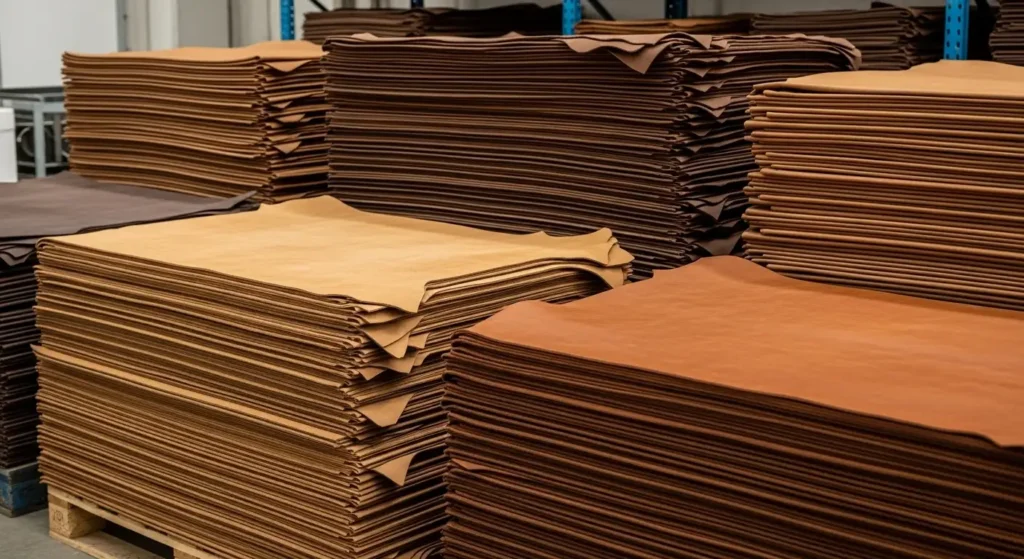
Leather stacking methods directly affect how hides arrive at the production stage. Poor arrangement causes compression marks, uneven drying and surface damage that cannot be reversed.
Flat stacking is preferred for most crust leather types. It distributes weight evenly and prevents distortion. Hanging works for thinner hides but risks elongation over long storage durations.
- Use pallets: Never store leather directly on concrete floors. Pallets elevate hides and improve airflow beneath the stack, reducing moisture absorption from ground surfaces.
- Avoid compression damage: Excess weight on lower hides causes permanent marks and grain distortion. Limit stack height based on hide thickness and grade.
- Separate by grade: Organize leather inventory storage by hide grade, thickness, and type. This supports efficient material management and makes quality inspection faster.
What Are the Best Mold and Fungus Prevention Strategies?
Mold on stored leather is caused by high humidity combined with poor airflow. Prevention requires active humidity control, anti-fungal treatments, and regular inspections.
Mold and mildew are the most damaging threats to crust leather. Once fungal growth penetrates the fiber structure, the hide is often unsalvageable.
- Air circulation: Maintain active airflow between hides. Use breathable separators between stacks to allow air to move through the pile.
- Silica gel or dehumidifiers: Use silica gel packs in enclosed zones or install industrial dehumidifiers to keep humidity below 65%. Replace or recharge silica gel regularly.
- Anti-fungal treatment: Apply fungicide solutions approved for leather use before long-term storage. This is critical in humid climates or monsoon seasons.
- Regular inspections: Check hides every two to four weeks for mold spots, discoloration, or unusual odors. Early detection stops contamination from spreading across the full inventory.
How Do You Prevent Cracks, Hardness and Dryness in Crust Leather?
Leather cracking prevention starts with maintaining its natural moisture balance. Crust leather loses moisture faster than finished leather in dry environments because it carries no surface protection.
- Conditioning methods: Apply a light leather conditioner or preservation oil before long-term storage. This replaces oils lost during tanning and keeps the fiber structure flexible.
- Avoid overdrying: If humidity drops below 45%, introduce moisture control measures immediately. Overdried leather loses elasticity permanently.
- Handling techniques: Always carry hides flat or rolled, never folded. Folding creates permanent crease lines that cannot be fixed in finishing. Train warehouse staff on proper leather handling precautions to prevent avoidable defects.
Explore our full range of premium crust leather hides to see how we maintain quality from tanning through to delivery.
Long-Term vs Short-Term Crust Leather Storage
Storage duration guidelines vary based on how quickly leather will enter production. The longer crust leather sits in storage, the more attention it requires.
- Short-term (up to 3 months): Standard temperature and humidity controls are sufficient. Check hides monthly.
- Long-term (3 to 12 months): Apply conditioning treatments every three months. Leather aging before production accelerates in poorly managed environments.
- FIFO rotation: Use First In, First Out inventory management. Older stock must always move to production before newer arrivals to prevent hides from exceeding their effective storage duration.
- Reconditioning before production: Hides stored beyond six months should be assessed and reconditioned 24 to 48 hours before entering the production line to restore flexibility.
Packaging and Transportation Considerations for Crust Leather
Leather quality preservation does not stop at warehouse storage. How leather is packaged and transported affects its condition upon arrival.
- Wrapping methods: Use breathable kraft paper or non-woven fabric covers. Avoid plastic wrapping that traps moisture and accelerates mold. Label each bundle with grade, thickness, and packing date.
- Export standards: For export shipments, comply with industrial storage standards for raw materials. Include moisture barrier packaging where required.
- Container loading: Place hides on wooden pallets to allow airflow beneath cargo. Avoid positioning leather near container walls where condensation forms. Use desiccant packs to control in-transit humidity.
Quality Inspection Before Moving to Production
A final inspection before production begins is non-negotiable in leather material management. Sending compromised hides to the production floor wastes time, labor, and finishing materials.
Checking moisture content: Use a leather moisture meter to verify hide moisture levels are within the acceptable range for your finishing process.
Surface defects: Examine each hide under good lighting for mold spots, compression marks, cracking, or discoloration. Separate affected hides for reconditioning or removal from the batch.
Shrinkage and brittleness: Gently bend a corner of the hide. Stiff leather that cracks at the bend needs reconditioning before it enters the cutting stage.
Looking for consistently well-stored, production-ready leather? Browse our crust leather collection at Akram Tannery and request samples directly.
Final Thoughts
Storing crust leather correctly is part of the production process itself. Temperature control, humidity management, proper stacking, mold prevention, and timely quality inspection all work together to protect your leather inventory from the tanning drum to the finishing line. A small investment in proper storage prevents significant losses in material quality and production output.
Contact Akram Tannery to discuss your sourcing needs or request a product catalog.
Frequently Asked Questions
What is the ideal humidity for storing crust leather?
The ideal relative humidity is between 50% and 65%. Above 70% causes mold and mildew. Below 40% causes cracking and fiber brittleness.
How long can crust leather be stored before it degrades?
With proper conditions, up to 12 months. Beyond six months, apply conditioning every three months and inspect before production entry.
How do you prevent mold on stored crust leather?
Maintain airflow between hides, keep humidity below 65%, use silica gel or dehumidifiers, apply anti-fungal treatments, and inspect every two to four weeks.
Should crust leather be flat-stacked or hung?
Flat stacking is preferred. It distributes weight evenly and prevents stretching. Use pallets to keep hides off the floor.
What temperature should a leather storage room be?
Between 15°C and 25°C (59°F to 77°F). Temperatures above 30°C accelerate drying and material deterioration.
Can dried-out crust leather be restored before production?
Applying a leather conditioner 24 to 48 hours before production can restore some flexibility. Severely cracked leather may need to be removed from the production batch entirely.