
Kasur is the largest leather tanning cluster in Pakistan with more than 250 active tanneries producing finished cow, buffalo, goat and sheep leather for global brands. A modern Kasur tannery processes 8,000 to 25,000 square feet of finished leather per day, holds LWG, REACH, and ZDHC compliance, and ships globally on lead times of 21 to 35 days. Akram Tannery operates from the heart of this cluster and supplies bag, footwear, garment, and upholstery leather to buyers in Europe, North America, and the Middle East.
Why Kasur is the Leather Capital of Pakistan
Kasur sits 55 kilometres south of Lahore on the historical hide trading route between Punjab and Sindh. The city built its tanning identity in the early twentieth century when artisanal pit tanners began supplying military boot makers in Lahore. Today the Kasur cluster handles roughly 65 percent of Pakistan’s finished leather output and contributes more than 600 million USD in annual exports.
The cluster works as a tight production ecosystem. Within a 12 kilometre radius buyers find raw hide markets, chemical agents, tanning drums, splitting and shaving services, finishing machines, packaging units, and shipping forwarders. This geography lets a tannery deliver a fresh quote inside 24 hours and start production the same week.
What an Industrial Tannery in Kasur Actually Does
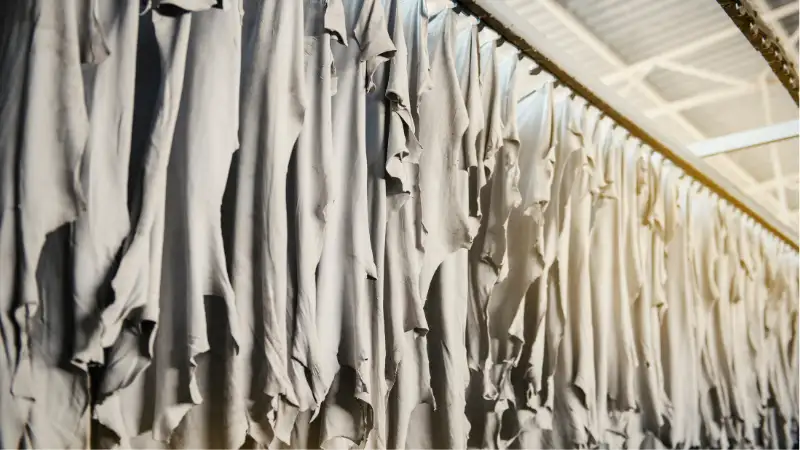
A modern Kasur tannery runs five distinct production stages, each with separate machinery and quality checks. The journey from a salted hide to a finished leather sheet takes between 14 and 28 working days depending on the article and finish system.
Stage 1: Raw Hide Selection
Hides arrive salted from the abattoirs in Punjab and Sindh. The grading team inspects every hide for size, weight, scar patterns, and brand marks. Premium hides go to upholstery and full grain bag leather. Mid grade hides move to corrected grain shoe upper. Lower grades enter split leather production.
Stage 2: Beamhouse and Wet Blue
The beamhouse soaks, limes, fleshes and delimes the hides before chrome tanning in large rotating drums. The result is wet blue, a stable intermediate that can be shipped or held in inventory before finishing. Pakistan exports significant volumes of wet blue cow and buffalo to Italy and Turkey for further processing.
Stage 3: Crust Finishing
Wet blue is shaved to the target thickness, retanned, dyed in drum baths, fatliquored, dried and conditioned. The output is crust leather, dyed and softened but without the surface finish. Crust is also a tradeable form that ships to brands which apply their own top coats.
Stage 4: Surface Finishing
Finishing is where the tannery delivers the visual and tactile identity of the final article. Spray lines, roller coaters, milling drums, embossing presses, and ironing machines apply colour, gloss level, grain pattern, and surface protection. A premium full grain finish takes four to six coats with curing time between each.
Stage 5: Quality Control and Packing
Every finished hide is measured on a digital area machine, graded by colour fastness, rub fastness, and tensile strength, then cut into commercial sizes. Hides are rolled, wrapped in polyethylene, and packed into export pallets. The full QC log accompanies every consignment.
Capabilities at Akram Tannery
| Capability | Detail |
| Daily output | 15,000 to 20,000 square feet of finished leather |
| Hide types | Cow, buffalo, goat, and sheep |
| Articles | Bag, wallet, upholstery, garment, shoe upper, lining, belt, glove leather |
| Finishes | Aniline, semi-aniline, pigmented, milled nappa, nubuck, suede, oil pull-up, crazy horse, embossed prints |
| Tanning systems | Chrome, chrome-free, vegetable, combination |
| MOQ (trial) | 500 square feet |
| Lead time | 21 to 28 days production, plus shipping |
| Export markets | Italy, Germany, UK, Spain, USA, Turkey, UAE, Japan |
Certifications That Protect International Buyers
Compliance is no longer optional in 2026. Retailers in Europe and North America require documentary proof of environmental, social, and chemical safety standards before they will accept a single shipment. The certifications below are the ones that matter most.
LWG (Leather Working Group)
The Leather Working Group audit covers traceability, water use, energy use, chemical management, and waste handling. Ratings range from Bronze to Gold. We hold a current LWG rating and share the audit certificate with every active buyer.
REACH Compliance
The European Union REACH regulation restricts hazardous substances in leather, including Chromium VI, formaldehyde, and certain azo dyes. Every batch we ship to EU buyers comes with a fresh REACH test report from SGS or Intertek.
ZDHC Programme
The Zero Discharge of Hazardous Chemicals programme governs which chemicals enter the tanning process. Brands like Nike, Adidas, H&M, and Inditex audit their suppliers on ZDHC commitment.
ISO 9001 Quality Management
ISO 9001 documents how the tannery manages quality across every production stage. The certificate signals process discipline rather than product safety, and most serious buyers will check for it.
Pakistan vs Italy vs India vs Turkey: Where Should a Brand Source Leather in 2026?
| Origin | Strength | Avg Finished Cow (USD per sqft) | Best For |
| Pakistan | Mid to premium cow and buffalo, strong value | 1.40 to 2.80 | Bags, upholstery, shoe upper, garments |
| Italy | Luxury full grain, advanced finishing | 4.50 to 9.00 | Luxury fashion, automotive |
| India | Goat and sheep, broad chemical range | 1.20 to 2.50 | Garment, glove, exotic articles |
| Turkey | Sheep and lamb, EU proximity | 2.20 to 4.20 | Garment leather, fast fashion |
Pakistan wins on the price-to-quality ratio for cow and buffalo articles in the mid to premium range. Italy remains the global benchmark for luxury but at three to four times the price. India and Turkey are stronger for specific niches but cannot match Pakistan on cow upholstery and bag leather volume.
The Export Process Step by Step
- Enquiry and spec sheet: The buyer sends a spec sheet with article, thickness, colour, finish, and volume.
- Quote and sample: The tannery responds within 24 to 48 hours with a quote and offers a paid sample of 50 to 100 square feet.
- Sample approval: The buyer tests the sample for thickness, colour fastness, rub fastness, and tensile strength.
- Pro Forma Invoice: Both parties sign a PFI fixing price, payment terms, lead time, and Incoterms.
- Advance payment: Standard term is 30 percent advance and 70 percent on copy of bill of lading.
- Production: The tannery produces inside 21 to 28 days and shares weekly progress photos.
- Pre shipment inspection: A Bureau Veritas or QIMA inspects against the approved spec.
- Shipping documents: The tannery issues commercial invoice, packing list, certificate of origin, and bill of lading.
- Customs clearance: The buyer’s freight forwarder clears the consignment at the destination port.
What Buyers Should Demand Before Signing a PO
- Current LWG audit certificate and date of next renewal
- REACH and SGS test report for the exact article ordered
- Three reference customers from the buyer’s own region
- Photos of the production line and finishing department
- Written confirmation of the daily output capacity
- Pre-shipment inspection clause in the PO
- Letter of Credit or escrow option for orders above 25,000 USD
About Akram Tannery
Akram Tannery has operated from Kasur for over two decades. The facility supplies finished cow and buffalo leather to footwear brands in Europe, bag manufacturers in the United States, and upholstery houses in the Middle East. Every shipment leaves the plant with LWG, REACH, and SGS documentation as standard.
Learn more about the team and the facility on our About page. Browse our finished leather range on the Products page, read our buyer education content on the blog, or request a sample lot through the contact form.
Frequently Asked Questions
How many tanneries are there in Kasur Pakistan?
The Kasur cluster has over 250 working tanneries with a wide range of sizes from boutique 1,000 square feet per day units to industrial 30,000 square feet per day plants. Around 35 of these hold a current LWG audit rating.
What types of leather does a Kasur tannery produce?
Kasur tanneries produce finished cow, buffalo, goat, and sheep leather across articles including bag, wallet, upholstery, shoe upper, lining, garment, glove, and belt leather. Finishes range from full aniline to embossed exotic prints.
How do I confirm a Kasur tannery is legitimate?
Check the LWG public auditor list, request three reference customers, verify the company registration through the Pakistan Tanners Association, and order a paid sample before placing a bulk PO.
What payment terms do Kasur tanneries accept?
Standard terms are 30 percent advance against Pro Forma Invoice and 70 percent against copy of bill of lading. Letters of Credit are accepted for orders above 25,000 USD. Avoid any supplier that demands 100 percent in advance.
Can I visit Akram Tannery in Kasur before ordering?
Yes. We host buyer visits with two weeks of notice. The tour covers raw hide selection, beamhouse, finishing, and warehouse. We can also arrange transport from Lahore airport on request.
What is the lead time from order to delivery in Europe?
Production takes 21 to 28 days. Sea freight from Karachi to Hamburg or Rotterdam adds 28 to 35 days. Full door to door delivery typically takes 50 to 65 days. Air freight reduces transit to 5 to 7 days.
Final Thoughts
Kasur is one of the few cities in the world where a buyer can source LWG audited finished leather at mid market prices with full export readiness. The cluster has matured beyond its informal roots and now serves global brands with documented compliance, third party inspections, and stable supply. Buyers who partner with the right Kasur tannery build supply chains that last for years rather than seasons.
To start a sourcing conversation request a digital catalogue through the Akram Tannery contact page today.