
Leather has been part of human craftsmanship for thousands of years, but the way it is produced today looks nothing like the process our ancestors used. What was once a slow, unpredictable trade built on trial and error has become a precise science, blending traditional hand-skill with modern chemistry, quality control systems, and international compliance standards. Behind every handbag, wallet, upholstered sofa or pair of boots lies a long, carefully monitored journey one that starts with a raw hide and ends with a material that is soft, durable, consistent, and beautiful.
Understanding how modern tanneries maintain leather quality from start to finish reveals just how much skill, discipline, and technology go into producing leather that buyers around the world can trust. A leading example of this approach is Akram Tannery, a Kasur, Pakistan-based leather manufacturer with more than three decades of experience turning raw hides into premium materials used in bags, accessories, footwear, and upholstery. Companies like this demonstrate that consistent leather quality isn’t accidental it’s the result of a tightly controlled system that touches every single stage of production.
This article walks through that entire journey: from hide sourcing and preservation, through tanning, dyeing, finishing, and quality inspection, to how leather manufacturers ensure the final product meets the expectations of designers, manufacturers and consumers across global markets.
1. It All Starts with Raw Hide Selection
Quality leather cannot be created from poor raw material, no matter how advanced the tannery’s machinery or how skilled its craftsmen are. This is why the first and arguably most important stage of leather production is hide selection.
Raw hides typically come from cattle, buffalo, goats, and sheep, and they arrive at the tannery in varying conditions depending on the animal’s age, health, diet, and how it was handled after slaughter. Experienced graders inspect each hide for:
- Thickness and density: Which affects how the leather will perform in different applications (upholstery leather needs different density than a delicate leather patch or label).
- Surface imperfections: Scars, insect bites, branding marks, or grain damage that can affect the visual quality of finished leather.
- Fat and flesh content: Excess material must be removed early to prevent decay and uneven tanning.
- Size and shape uniformity: Important for manufacturers who need consistent cutting yield for products like bags, wallets, or upholstery panels.
Hides are then sorted into quality grades. Top-grade hides with minimal blemishes are typically reserved for premium finished leather and vegetable tanned leather used in visible, high-end applications, while hides with more natural marking might be directed toward embossed or printed leather lines, where texture treatments can even out minor surface variation.
This grading stage sets the tone for everything that follows. A tannery that skips careful hide selection will struggle to produce consistent quality later on, regardless of how advanced its tanning and finishing processes are.
2. Preservation and Storage Before Processing
Raw hides begin to degrade almost immediately after an animal is slaughtered, so preservation is critical. Historically, this was done through simple air-drying or salting, but modern tanneries use more controlled methods to extend the window before hides start processing without sacrificing quality.
Common preservation techniques include:
- Wet-salting, where hides are packed with salt to draw out moisture and inhibit bacterial growth.
- Brine curing, which submerges hides in a salt solution for more even preservation.
- Chilling and refrigeration, used especially for hides that will be processed quickly.
Proper preservation prevents putrefaction, hair slippage, and grain damage all of which would compromise the leather’s strength and appearance long before it even reaches the tanning drums. Tanneries that take export orders seriously, supplying markets across the US, UK, Europe, and the Gulf region, understand that even a small lapse in hide preservation can ruin an entire batch and damage a client relationship built over years.
3. Soaking and Cleaning: Rehydrating the Hide
Before any chemical tanning can begin, preserved hides must be rehydrated and thoroughly cleaned. This stage, known as soaking, restores the hide’s natural moisture content and removes salt, dirt, blood, and other surface contaminants.
Soaking typically takes place in large drums or pits filled with water, sometimes combined with mild surfactants or enzymes that help loosen dirt without damaging the hide’s fiber structure. This step can take anywhere from a few hours to over a day, depending on how the hide was preserved and its thickness.
Careful control of water temperature and soaking duration matters enormously here. Hides soaked too briefly retain contaminants that interfere with tanning; hides soaked too long can begin to degrade, weakening the fiber network that gives leather its strength and flexibility.
4. Liming and Unhairing: Preparing the Fiber Structure
Once cleaned, hides move into the liming process, where they are treated with a lime and sulfide solution. This step accomplishes two critical goals: it loosens and removes hair and epidermis from the hide surface, and it opens up the collagen fiber structure, making the hide more receptive to tanning chemicals later on.
After liming, hides go through mechanical unhairing and fleshing, where remaining hair, fat, and flesh residue is physically scraped away using specialized machines. This step must be done with precision cutting too deep can damage the grain layer (the outermost surface that gives leather its natural texture and character), while insufficient fleshing leaves residue that interferes with tanning uniformity.
At this stage, the hide is often referred to as a “pelt,” and it’s essentially a blank canvas clean, opened, and ready for the transformation that turns raw animal skin into leather.
5. Deliming and Bating: Fine-Tuning the pH
Before tanning agents can properly penetrate the hide, the pelt’s pH level must be brought back down from the alkaline state created during liming. This is done through deliming, which uses mild acidic compounds to neutralize the lime.
Bating follows, using enzymes to further soften the pelt, remove any remaining non-collagen proteins, and improve the grain’s smoothness and flexibility. This step has a significant influence on the final leather’s softness and drape critical qualities for products like garment leather, gloving leather, and soft-handle upholstery leather.
6. Pickling: Preparing for Tanning
Pickling adjusts the pelt’s pH even further using salt and acid, creating the ideal chemical environment for tanning agents to bind properly with the collagen fibers. This step also acts as a preservation measure if there will be any delay before the actual tanning process begins.
7. Tanning: The Defining Transformation
Tanning is the process that actually converts a perishable animal hide into leather a stable material that resists decay, retains flexibility, and can last for decades with proper care. This is arguably the single most defining stage in the entire production journey, and it’s where a tannery’s identity and specialization really show.
There are two primary tanning methods used in the industry today:
Chrome Tanning Chrome tanning uses chromium salts to stabilize the collagen fibers. It’s fast, produces soft and pliable leather, and offers excellent resistance to heat and water. Most of the world’s leather including much of what’s used in footwear, bags, and upholstery is chrome-tanned because of its efficiency and consistent results.
Vegetable Tanning Vegetable tanning uses natural tannins extracted from tree bark, leaves, and other plant materials. This traditional method takes considerably longer sometimes weeks but produces a firmer, more structured leather with a distinctive, natural aesthetic that develops a rich patina over time. Vegetable tanned leather is highly valued for belts, high-end bags, tooling leather, and products where the leather’s natural character is meant to be showcased and to age gracefully.
Many modern tanneries, including reputable Pakistani leather manufacturers, offer both tanning methods because different markets and product categories demand different characteristics. A designer creating a rugged, artisanal leather satchel may specifically request vegetable-tanned material for its texture and aging properties, while a manufacturer producing car seat covers may prioritize chrome-tanned leather for its consistency and resistance to environmental stress.
Regardless of the method, the tanning drums must be carefully monitored for temperature, chemical concentration, and drum rotation speed. Inconsistent tanning leads to leather that is unevenly stable parts of the hide may be properly converted while others remain vulnerable to decay, an issue that would only reveal itself months later, after the leather has already been made into a finished product.
8. Sammying and Splitting: Controlling Thickness
After tanning, hides are squeezed to remove excess moisture (a process called sammying) and then split to a uniform thickness. Splitting separates the top grain layer the strongest, most visually appealing part of the hide from the lower split layers, which are often used for suede, nubuck leather, or as a base for laminated leather.
Thickness control at this stage is critical for downstream applications. Upholstery leather destined for furniture requires a different thickness profile than leather intended for wallets, patches, or fine leather goods, and tanneries producing for multiple product categories need precise splitting equipment and skilled operators to hit exact specifications batch after batch.
9. Retanning: Fine-Tuning Character and Feel
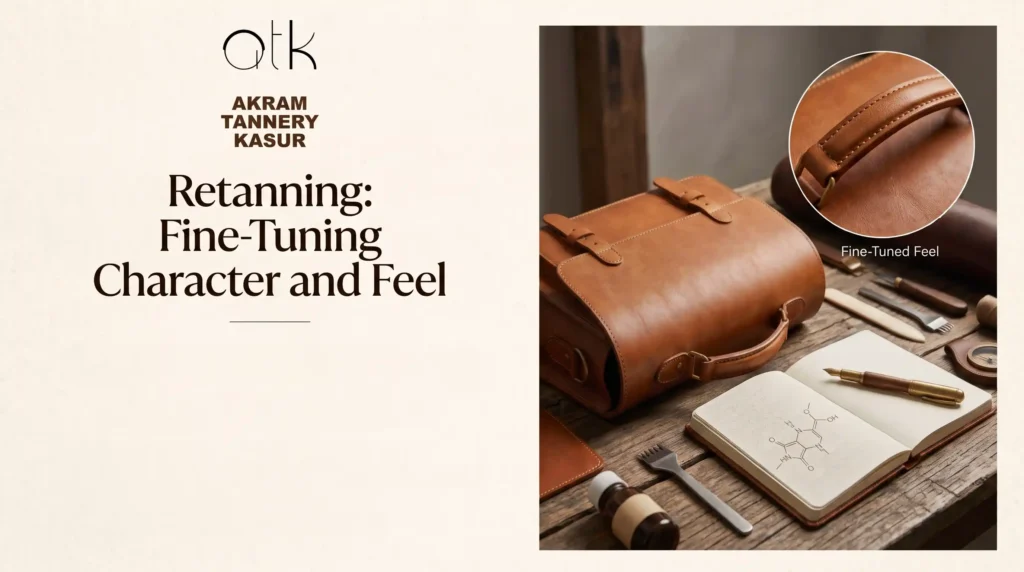
Retanning is where a tannery really begins customizing the leather’s final characteristics. A secondary tanning treatment is applied to fine-tune softness, fullness, and how the leather will accept dye and finishing treatments later. Retanning can also correct minor grain imperfections and improve uniformity across a batch, which matters enormously for manufacturers who need consistent material across large production runs.
This step is where the technical expertise of a tannery truly separates premium leather from average material. Getting the retanning formula wrong can leave leather feeling papery, overly stiff, or inconsistent from hide to hide a problem that becomes very visible once the leather is cut and stitched into a finished product.
10. Dyeing: Bringing Leather to Life
Dyeing gives leather its color, and it can be done in several ways depending on the intended final look:
- Drum dyeing immerses the leather in dye baths within rotating drums, allowing color to penetrate deeply and evenly throughout the material.
- Surface dyeing applies color only to the top layer, often used in combination with other finishing techniques.
- Aniline dyeing uses transparent dyes that preserve the hide’s natural grain and markings, prized for premium, natural-looking leather.
Color consistency across a production batch is one of the most demanding technical challenges in tanning. Even small variations in temperature, dye concentration, or drum timing can create noticeable shade differences between hides something that quality-focused tanneries catch and correct through careful batch testing before full production runs proceed.
11. Fatliquoring: Restoring Softness and Flexibility
After the intense wet processing of tanning and dyeing, hides need lubrication restored to their fiber structure to prevent them from becoming stiff and brittle once dried. Fatliquoring introduces oils and fats into the leather, which coat the individual collagen fibers and keep them supple.
The right fatliquoring formula depends heavily on the leather’s intended use. Pull up leather, for example known for its distinctive two-tone effect when stretched or flexed relies on a specific oil-and-wax fatliquoring recipe that allows color to shift visibly under tension, creating the rustic, lived-in look that makes this leather style so popular for boots and rugged accessories.
12. Drying: Setting the Foundation for Finishing
Drying removes remaining moisture and sets the leather’s structure before finishing treatments are applied. Common drying methods include:
- Vacuum drying, which uses heat and pressure for fast, even moisture removal.
- Toggle drying, where hides are stretched onto frames to dry flat and smooth, improving surface area yield.
- Air drying, a slower, more traditional method still used for certain vegetable-tanned leathers where a more natural hand-feel is desired.
Improper drying can cause shrinkage, warping, or a leathery material that feels stiff and lifeless. Skilled tanneries calibrate drying conditions carefully based on the leather type, thickness, and tanning method used.
13. Conditioning and Milling: Softness Without Compromise
Depending on the desired final texture, leather may go through conditioning (adding controlled moisture back before mechanical softening) and milling a process where hides are tumbled in large drums to physically break down stiffness and develop a soft, pliable hand-feel. This step is especially important for leather intended for garments, soft-structure bags, and any application where drape and comfort matter as much as durability.
14. Buffing: Refining the Surface
Buffing lightly sands the leather’s surface, which serves two purposes. First, it can smooth out minor imperfections in lower-grade hides, making them suitable for finished leather applications. Second, it creates the soft, brushed nap that defines suede and nubuck-style leathers. Nubuck leather, in particular, depends heavily on precise, even buffing to achieve its signature velvety texture without weakening the grain layer beneath.
15. Finishing: The Final Layer of Protection and Personality
Finishing is where leather receives its final surface treatment the layer that determines how it looks, feels, and performs in daily use. This stage includes several possible techniques, often combined:
- Surface coating, applying protective layers that improve resistance to scuffing, water, and staining.
- Embossing, pressing textured patterns into the leather’s surface. Embossed leather can replicate exotic animal patterns like crocodile or snake skin, or create entirely custom textures, all while using standard cattle hide as the base material offering designers striking visual variety at accessible cost.
- Digital printing, a more modern technique that applies detailed, high-resolution designs directly onto the leather surface, opening possibilities for custom patterns, branding, and artistic effects that traditional methods can’t achieve.
- Laminating, bonding a thin protective or decorative film onto the leather surface. Laminated leather offers enhanced durability, a glossy or textured finish, and resistance to wear, making it popular for footwear and fashion accessories that need extra surface protection.
Finishing is also where a tannery differentiates its crust leather semi-finished, tanned but not yet fully processed leather that gives manufacturers flexibility to apply their own final color and finish according to specific client or market requirements. Many international buyers actually prefer sourcing crust leather because it allows their own production teams to customize the finishing stage to match seasonal trends or brand-specific requirements.
16. Quality Control: Testing Every Batch
No matter how well each processing stage was executed, no reputable tannery ships leather without rigorous final quality control. This typically involves:
- Visual grading, where trained inspectors examine every hide under proper lighting for color consistency, grain quality, and surface defects.
- Thickness measurement, using precision gauges to confirm the leather meets the specified thickness tolerance for its intended application.
- Tensile and tear strength testing, ensuring the leather can withstand the stresses of stitching, stretching, and daily use.
- Colorfastness testing, checking that dyes won’t bleed, fade, or transfer under friction, light exposure, or moisture.
- Size and yield measurement, calculating the usable square footage of each hide, which directly affects pricing and cutting efficiency for manufacturers.
Tanneries that export internationally also increasingly test against environmental and chemical safety standards, since global buyers particularly in the EU, UK, and North America require documentation confirming leather is free from restricted substances and produced using environmentally responsible practices. This has pushed many tanneries toward more sustainable tanning chemistries and wastewater treatment systems, both to meet regulatory requirements and to satisfy growing consumer demand for responsibly produced materials.
17. Sorting, Grading and Packing for Delivery
Once quality control is complete, leather is sorted by grade, color batch, and size before being packed for shipment. Consistent sorting matters enormously to manufacturers downstream a furniture maker producing matching upholstery leather panels, or a bag brand cutting identical wallet components, needs assurance that every hide in a shipment will behave and look the same way once it reaches their cutting tables.
Some tanneries also produce specialty items like leather patches and labels small, precisely finished leather pieces used for branding on jeans, bags, and accessories which require an entirely separate level of precision cutting and finishing consistency, since these small details are often the first thing a customer notices on a finished product.
18. Specialty Categories: Meeting Diverse Market Needs
Modern tanneries don’t just produce one type of leather they maintain diverse product lines to serve different industries and design needs. Beyond the categories already discussed, many tanneries also produce:
- Upholstery leather, engineered for durability, abrasion resistance, and comfort in furniture and automotive applications.
- Woven leather, where leather strips are cut and hand- or machine-woven into intricate patterns, popular in high-fashion accessories and premium bag collections.
Maintaining quality across such a wide product range requires deep technical expertise at every stage described above, along with flexible production lines that can be calibrated differently depending on which product category is being run.
19. Why Consistency Is the Real Measure of Quality
Perhaps the most important and least visible aspect of leather quality is consistency. A single beautiful hide is relatively easy to produce. Producing thousands of hides, batch after batch, month after month, that all meet the same standards of thickness, color, texture, and strength is what separates a world-class tannery from an average one.
This consistency comes from disciplined process control at every one of the eighteen stages outlined above from hide selection through final packing. It also comes from experience. Tanneries that have operated for decades, refining their formulas and training generations of skilled craftsmen, tend to produce far more reliable results than newer operations still working through trial and error.
This is exactly why long-established leather manufacturers with decades of operational history companies that have supplied international markets across the US, UK, Europe, the Gulf, and beyond are often the preferred partners for brands and manufacturers who cannot afford inconsistency in their supply chain. When a designer or manufacturer sources leather, they aren’t just buying a material; they’re buying a guarantee that the next batch will match the last one.
Conclusion
From the moment a raw hide arrives at the tannery gate to the moment finished leather is packed for export, quality is built and protected at every single stage. Careful hide grading, precise chemical processing, skilled tanning and dyeing, thoughtful finishing techniques, and rigorous quality control all work together to transform a perishable raw material into one of the most versatile, durable, and beautiful materials used in fashion, furniture, and beyond.
Modern tanneries that master this entire process offering everything from vegetable-tanned and finished leather to embossed, pull-up, crust, laminated, nubuck and woven varieties give designers and manufacturers the confidence to build products that will last. It’s this combination of tradition, technical precision and unwavering attention to detail that continues to define genuine leather craftsmanship, batch after batch, decade after decade.
FAQs
1. What makes leather “premium quality”?
Premium leather comes from careful hide selection, proper tanning (chrome or vegetable), consistent thickness, even dyeing, and rigorous quality control at every production stage not just from the finishing touches.
2. What’s the difference between chrome-tanned and vegetable-tanned leather?
Chrome tanning is faster and produces soft, water-resistant leather ideal for footwear, bags, and upholstery. Vegetable tanning takes longer, uses natural plant tannins, and creates firmer leather that develops a rich patina over time popular for belts and artisanal goods.
3. What is crust leather and why do manufacturers buy it?
Crust leather is tanned but not yet finished. Many international buyers prefer it because it lets their own production teams apply custom color and finishing to match specific brand or market requirements.
4. How is pull-up leather different from regular leather?
Pull-up leather is treated with a special oil-and-wax fatliquoring process that causes color to lighten when the leather is stretched or flexed, creating a distinctive two-tone, rustic look popular in boots and rugged accessories.
5. What is embossed leather used for?
Embossed leather has textured patterns pressed into its surface such as crocodile, snake, or custom designs using standard cattle hide as the base. It’s widely used for handbags, wallets, and fashion accessories that need a distinctive look at accessible cost.
6. What is the difference between nubuck and suede?
Nubuck is buffed on the grain (outer) side of the hide, giving it a fine, velvety texture while retaining more strength. Suede is buffed on the flesh side, making it softer but generally less durable.
7. Why is thickness consistency important in leather manufacturing?
Different products need different thicknesses upholstery leather, wallets, and leather patches all require specific gauges. Inconsistent thickness affects cutting yield, durability, and the finished product’s overall quality.