
The leather chemicals market will grow from $11.02 billion in 2025 to $15.69 billion by 2031, driven primarily by one factor: the shift away from chromium-based tanning. Currently, 90% of global leather still uses chrome tanning, but regulatory pressure, environmental concerns, and consumer demand are forcing rapid change. For leather buyers, brands, and manufacturers, understanding these tanning innovations determines whether you’ll meet future compliance requirements or face restricted market access.
Why Sustainability Is Now Critical in Leather Tanning
Chrome tanning dominates because it works efficiently. The process takes days instead of weeks, creates soft leather, and costs less than alternatives. But these advantages come with serious problems.
Only 60-70% of chromium used during tanning binds to leather. The remaining 30-40% discharges into wastewater, contaminating water sources, soil, and ecosystems. More concerning is the risk of chromium III converting to chromium VI, a toxic, carcinogenic substance affecting both workers and communities near tanneries.
California’s 2025 regulatory action banned new hexavalent chromium facilities, pushing chrome-free adoption. The EU’s PFAS regulations and environmental directives apply similar pressure. These aren’t isolated policies; they represent global regulatory trends that will accelerate through 2026 and beyond.
Consumer awareness drives change alongside regulation. Brands like Gruppo Mastrotto and Stahl Holdings pioneer sustainable solutions responding to market demand. Major retailers now require environmental documentation from suppliers. Without certified sustainable tanning methods, brands lose access to premium markets.
The leather industry faces a fundamental choice: adapt to sustainable tanning innovations or accept declining market relevance as regulations tighten and consumer preferences shift.
Exploring sustainable leather options for your brand? Contact Akram Tannery to discuss eco-friendly tanning methods meeting current and future compliance standards.
Chrome-Free and Low-Impact Tanning Technologies
Replacing chrome tanning requires alternatives delivering comparable performance without environmental damage. Recent innovations achieve this balance.
Vegetable Tanning Advancements
Traditional vegetable tanning uses plant-based tannins from tree bark, but historically produced leather with lower mechanical strength and longer processing times. Modern combination tanning methods solve these limitations.
Recent research shows that vegetable tanning, primary tanning followed by retanning with aldehyde, aluminum, and titanium salts, produces shoe upper leather with tensile strength of 260-275 kg/cm², matching or exceeding chrome-tanned leather. The combination approach achieves:
- Superior mechanical properties compared to full vegetable tanning
- Improved shrinkage temperature for thermal stability
- Lower BOD, COD, TDS, and TSS in wastewater
- Environmental compatibility without chrome pollution
The process works by using vegetable tannins as the base tanning agent, then reinforcing with targeted retanning materials that enhance specific properties. This preserves vegetable tanning’s sustainability while eliminating its traditional performance limitations.
Polymer-Based Chrome-Free Tanning
Polymer chemistry creates tanning agents with chrome-level performance and zero toxic metal discharge.
Poly(carbamoyl sulfonate) represents a breakthrough technology. Recent formulations achieve:
- 99% blocking ratio without organic solvents
- Shrinkage temperature of 83.2°C at 6% dosage
- Excellent collagen fiber dispersion
- Strong mechanical properties
- Biodegradability (BOD5/COD > 0.45)
The metal-free system eliminates chromium pollution while delivering tanned leather meeting garment standards (tensile strength ≥10 MPa, tear strength ≥20 N/mm).
Epoxy-Based Tanning Systems
Waterborne epoxy polymers create another viable chrome alternative. Testing shows epoxy tanning produces leather with:
- Shrinkage temperature of 80±2°C standalone
- 101°C shrinkage temperature when combined with just 3% chrome (versus 100% chrome traditionally)
- 108% thickening rate
- Superior softness compared to chrome leather
- Tensile strength 26 N/mm², tear resistance 78 N/mm
This “chrome-less” approach reduces chromium use by 97% while maintaining performance. For tanneries transitioning from chrome, it offers a practical stepping stone before full chrome-free conversion.
Chitosan-Based Tanning Systems
Biomass-derived chitosan combined with dyes and aluminum creates integrated tanning-dyeing systems with remarkable benefits. Research demonstrates:
- 60-80% water savings versus traditional tanning
- 30% reduction in electric energy consumption
- 50-70% lower total process time
- Simultaneous tanning and color dyeing functionality
- Carbon footprint reduction through process integration
The chitosan approach (COS-Dyes-Al) eliminates separate tanning and dyeing steps, fundamentally restructuring leather production for efficiency and sustainability.
Aldehyde-Based Technologies
Biomass-based aldehyde tanning agents combined with terminal aluminum treatment (BAT-TAT) produce leather with properties exceeding traditional chrome:
- Tensile strength: 19.78 N/mm² (vs. 7.13 N/mm² chrome)
- Tear strength: 101.47 N/mm (vs. 43.12 N/mm chrome)
- Carbon-neutral processing
- Robust crosslinking network in collagen fibers
The terminal aluminum treatment bonds with oxygen-containing functional groups in the tanning agent and collagen, creating a strong network without chromium’s environmental hazards.
Need technical guidance on chrome-free tanning options? Akram Tannery’s experienced team can discuss which sustainable methods align with your product requirements and market positioning.
Water, Energy, and Chemical Reduction Innovations
Sustainable tanning extends beyond eliminating chrome to addressing broader environmental impacts.
Water Recycling Technologies
Modern tanneries implement closed-loop water systems, reusing 90% of processing water. This dramatically reduces:
- Freshwater consumption
- Wastewater discharge volume
- Pollutant load entering treatment systems
- Operating costs over time
Advanced membrane filtration and treatment technologies make water recycling economically viable even for mid-sized operations. The upfront investment creates long-term cost savings while meeting increasingly strict water use regulations.
Energy Efficiency Improvements
Processing time directly correlates with energy consumption. Innovations reducing tanning duration from weeks to days cut energy use substantially.
Chitosan-based systems achieving 50-70% time reduction translate to proportional energy savings. Automated processing lines optimize temperature, pressure, and chemical application for maximum efficiency, reducing waste and energy simultaneously.
South America’s tanneries investing in automated systems demonstrate regional industry adaptation to cost structure challenges through technology rather than simply relocating operations.
Chemical Use Minimization
Sustainable tanning reduces chemical volumes through:
Higher absorption rates: Chrome-free tanning agents achieving 85%+ absorption (versus 60-70% chrome absorption) mean less chemical input and lower wastewater contamination.
Integrated processes: Tanning-dyeing combinations eliminate separate chemical treatments, cutting total chemical use by 50% or more.
Bio-based alternatives: Replacing petroleum-derived chemicals with biomass sources reduces fossil fuel dependence and improves biodegradability.
The leather chemicals market’s 6.06% CAGR through 2031 reflects growing demand specifically for bio-based auxiliaries and sustainable formulations replacing conventional chemicals.
Biodegradability Standards
Sustainable tanning agents now achieve BOD5/COD ratios exceeding 0.45, indicating good biodegradability. This ensures wastewater treatment plants can process effluents effectively without accumulating persistent pollutants.
Traditional chrome tanning creates wastewater with poor biodegradability, requiring expensive specialized treatment or creating long-term environmental contamination. Chrome-free systems with high biodegradability integrate into standard municipal treatment infrastructure.
How Sustainable Tanning Meets Global Compliance Standards
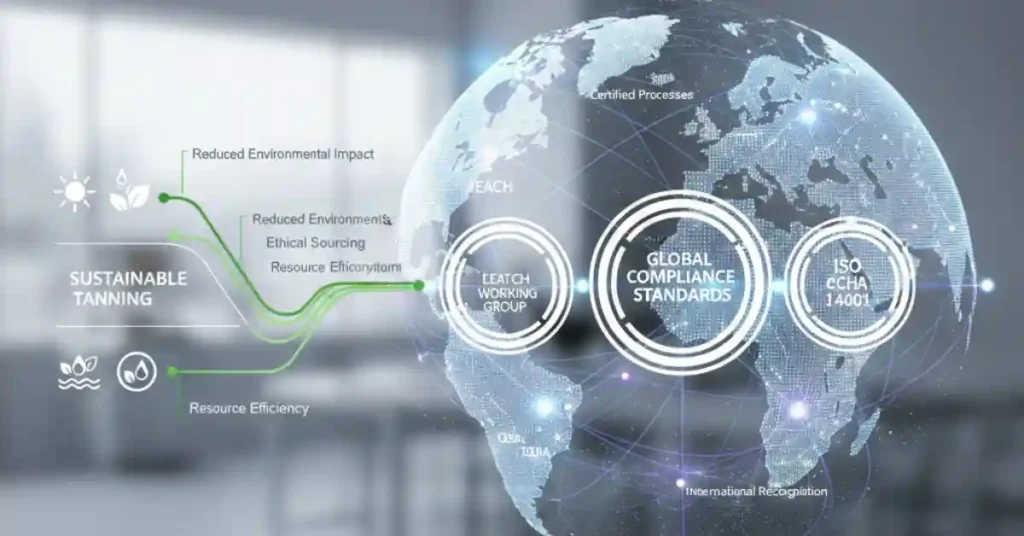
Regulatory frameworks worldwide increasingly mandate sustainable tanning practices. Understanding these requirements helps buyers plan sourcing strategies.
Leather Working Group (LWG) Certification
LWG provides the most recognized environmental audit for leather manufacturing. The certification evaluates:
- Energy consumption and greenhouse gas emissions
- Water use and wastewater treatment
- Chemical management and restricted substance compliance
- Waste management practices
- Traceability systems
Gold, Silver, and Bronze ratings give buyers clear sustainability benchmarks. Major brands now require LWG certification from all leather suppliers. Luxury goods companies joining LWG in 2025, including Jaguar Land Rover and Maserati, demonstrate the certification’s expanding importance beyond fashion into automotive and other sectors.
California Chromium Regulations
California’s ban on new hexavalent chromium facilities sets a precedent that other jurisdictions will likely follow. The regulation recognizes chrome tanning’s inherent chromium VI conversion risk and prohibits facilities that could create this exposure.
For tanneries, this means chrome-based operations face mounting compliance costs for containment and monitoring. Chrome-free operations avoid these requirements entirely while positioning for markets where similar bans spread.
European Chemical Regulations
REACH (Registration, Evaluation, Authorization and Restriction of Chemicals) regulates chemical substance use across the European Union. Chromium compounds face increasing restrictions, with regulators enforcing stricter thresholds for acceptable levels.
The EU’s broader environmental directives on industrial emissions and water protection create compliance frameworks that effectively phase out conventional chrome tanning for manufacturers serving European markets.
U.S. EPA Standards
Clean Air and Water Acts regulate tannery emissions and effluent. EPA standards require treatment systems for chromium-containing wastewater, creating ongoing compliance expenses.
Tanneries using chrome-free methods eliminate these specific requirements, though general water quality and air emission standards still apply. The regulatory burden and monitoring costs drop substantially without chrome handling.
Emerging Global Standards
Beyond established Western regulations, developing markets implement their own environmental standards. China’s environmental protection law affects leather manufacturing significantly. India’s pollution control requirements tighten. These regulatory trends are global, not regional.
Buyers sourcing internationally must verify suppliers meet not just current requirements but also anticipated future standards. Chrome-free tanning provides future-proof compliance across multiple jurisdictions.
What This Means for Leather Buyers and Brands
Sustainable tanning innovations create both challenges and opportunities for leather buyers.
Market Access Requirements
Premium retailers increasingly require environmental certifications. Without LWG ratings or chrome-free documentation, suppliers cannot access major markets. This trend accelerates as consumer awareness grows and regulatory pressure mounts.
Buyers must verify their suppliers can provide:
- Current LWG certification (Gold/Silver/Bronze)
- Chrome-free tanning documentation for applicable products
- Water treatment and chemical management records
- Traceability from the hide source through finishing
Suppliers unable to provide this documentation face restricted market access, creating supply chain risk for buyers depending on them.
Cost Implications
Chrome-free tanning currently costs 20-30% more than conventional chrome tanning in many applications. However, several factors offset this premium:
Regulatory compliance: Chrome operations face increasing compliance costs that chrome-free operations avoid
Market positioning: Premium brands command prices, justifying sustainable material costs
Long-term pricing: As chrome-free adoption increases, economies of scale reduce cost premiums
Risk mitigation: Chrome-free operations avoid regulatory shutdown risk
Smart buyers evaluate total cost, including compliance risk, market access, and brand positioning, not just immediate material cost.
Performance Considerations
Early chrome-free alternatives often underperformed chrome in specific properties. Modern innovations eliminate most performance gaps:
- Tensile and tear strength now match or exceed chrome leather
- Shrinkage temperatures reach acceptable levels for most applications
- Absorption rates for dyes and finishing materials improve continuously
- Processing times decrease through technological advancement
Some specialized applications still favor Chrome for specific technical reasons, but the performance case for Chrome weakens yearly as alternatives improve.
Supply Chain Planning
Transitioning to sustainable tanning requires strategic planning:
Supplier qualification: Identify and vet chrome-free capable suppliers before urgent needs arise
Product testing: Validate chrome-free leather performance in your specific applications through sampling and prototyping
Timeline management: Account for potentially longer lead times as suppliers scale chrome-free capacity
Documentation systems: Establish processes for tracking and verifying sustainability claims throughout your supply chain
Customer communication: Prepare messaging explaining sustainability initiatives and any pricing implications
Brands that proactively plan transitions execute smoothly. Those reacting to sudden regulatory or retailer requirements face disruption and rushed, suboptimal decisions.
Competitive Positioning
Sustainability credentials differentiate brands in crowded markets. Legitimate chrome-free leather, properly certified and documented, becomes a marketing asset telling authentic environmental responsibility stories.
Consumers increasingly research brand practices. Verified sustainable sourcing, not just marketing claims, builds trust and loyalty. This matters particularly for younger consumers who prioritize environmental values and research purchases thoroughly.
Ready to secure a sustainable leather supply for your brand?
Akram Tannery’s 34+ years of experience include expertise in sustainable tanning methods meeting global compliance standards. With 5 million square feet of annual capacity and proven export operations to the USA, Europe, the Middle East, and Asia, we supply leather that meets current environmental requirements while anticipating future standards.
Request samples demonstrating sustainable tanning performance. Discuss certification requirements for your markets. Explore how eco-friendly processing delivers quality without compromise.
The future of leather is sustainable. The question isn’t whether your supply chain will adapt, it’s whether you’ll lead this transition or scramble to catch up as regulatory and market pressures intensify.
Your sustainable leather sourcing strategy starts with the right partner. Connect with Akram Tannery today.
Frequently Asked Questions
What is chrome-free leather tanning?
Chrome-free tanning uses alternative agents like vegetable tannins, polymers, enzymes, or aldehyde-based materials instead of chromium salts. Modern chrome-free methods achieve comparable or superior performance to chrome while eliminating toxic chromium discharge, Cr(VI) conversion risks, and associated environmental and health hazards.
Why are tanneries moving away from chrome tanning?
Regulatory pressure (California hexavalent chromium bans, EU REACH restrictions), environmental concerns (30-40% chromium waste discharge), health risks (Cr(VI) carcinogenic conversion), consumer demand for sustainable products, and retailer certification requirements drive the shift. Chrome-free tanning provides market access as regulations tighten globally.
Does chrome-free leather perform as well as chrome-tanned leather?
Modern chrome-free innovations match or exceed chrome performance: vegetable-aluminum combination tanning achieves 260-275 kg/cm² tensile strength, polymer systems reach 83°C shrinkage temperature, and aldehyde-aluminum methods produce 19.78 N/mm² tensile strength versus 7.13 N/mm² chrome. Performance gaps have largely closed through technological advancement.
How much does sustainable tanning cost compared to chrome tanning?
Chrome-free tanning typically costs 20-30% more initially, but total costs narrow when factoring in chrome operation compliance expenses, regulatory shutdown risks, and waste treatment requirements. As adoption scales, cost premiums decrease. Premium market access often justifies sustainable material investments through higher retail prices.
What certifications prove that leather is sustainably tanned?
Leather Working Group (LWG) Gold/Silver/Bronze certification provides the primary sustainability audit covering energy, water, chemicals, and waste. REACH compliance, ISO 14001 environmental management, and chrome-free documentation from accredited labs also verify sustainable practices. Major retailers require these certifications for market access.