
The leather goods market reached $41.93 billion in 2026 and is heading toward $76.87 billion by 2035. Fashion brands are shifting their material choices based on what consumers actually want: sustainable sources, premium textures, and authentic quality. If you’re sourcing leather for footwear or accessories, understanding these 2026 trends determines whether your products connect with buyers or sit on shelves.
Why Leather Trends Are Shifting in 2026
Three forces are reshaping leather choices in footwear and accessories.
Consumer priorities changed. Quality beats quantity. A 2025 industry report shows shoppers prefer durable leather products over fast fashion alternatives. They want pieces that last years, not months.
Regulatory pressure increased. Environmental standards tightened globally. Brands using conventional tanning face compliance costs and supply chain scrutiny. Leather Working Group membership among luxury brands jumped 40% in early 2025, with Jaguar Land Rover and Maserati joining.
Material innovation accelerated. New finishing techniques create textures and performance characteristics that weren’t possible five years ago. Lightweight treatments, natural grain preservation, and eco-friendly processing methods now work at a commercial scale.
The result: 2026 leather trends favor materials that deliver sustainability credentials and premium aesthetics simultaneously. Brands can’t choose one over the other anymore.
Looking for leather that meets 2026 market demands? Browse material options at Akram Tannery to see how modern processing delivers both quality and sustainability.
Sustainable and Eco-Certified Leather Materials
Sustainability isn’t optional in 2026. It’s a baseline requirement for brands targeting mid-market and premium segments.
What Qualifies as Sustainable Leather
Genuine sustainable leather comes from:
- LWG-certified tanneries with audited environmental practices
- Vegetable tanning processes using plant-based materials
- Chrome-free tanning methods that eliminate toxic chemicals
- Traceable supply chains from farm to finished product
Around 45% of consumers now favour eco-friendly leather over conventional alternatives. This percentage climbs higher in European and North American markets where environmental awareness is strongest.
Market Impact
The sustainable leather segment is growing 12% annually, outpacing conventional leather growth by a significant margin. Premium footwear brands like Volvo (for automotive), and fashion houses are requiring sustainability certifications from all leather suppliers.
Brands without certified sustainable leather options risk losing contracts with major retailers. Nordstrom, Bloomingdale’s, and European department stores now demand environmental documentation before accepting new leather products.
Processing Methods That Matter
Vegetable tanning uses natural tannins from tree bark, taking weeks instead of the days required for chrome tanning. The process creates leather that develops rich patina over time and biodegrades naturally.
Metal-free tanning eliminates chromium and other heavy metals. The leather maintains durability while meeting the strictest environmental standards.
Water recycling systems in modern tanneries reuse 90% of processing water, reducing environmental impact dramatically compared to traditional operations.
Supply Chain Transparency
2026 buyers want proof, not promises. Certifications that carry weight:
- Leather Working Group (LWG) Gold, Silver, or Bronze ratings
- ISO 14001 environmental management certification
- REACH compliance documentation
- Traceability from hide origin through tanning
Brands that can provide this documentation gain competitive advantages in wholesale and retail channels.
Nubuck and Suede Finishes Gain Popularity
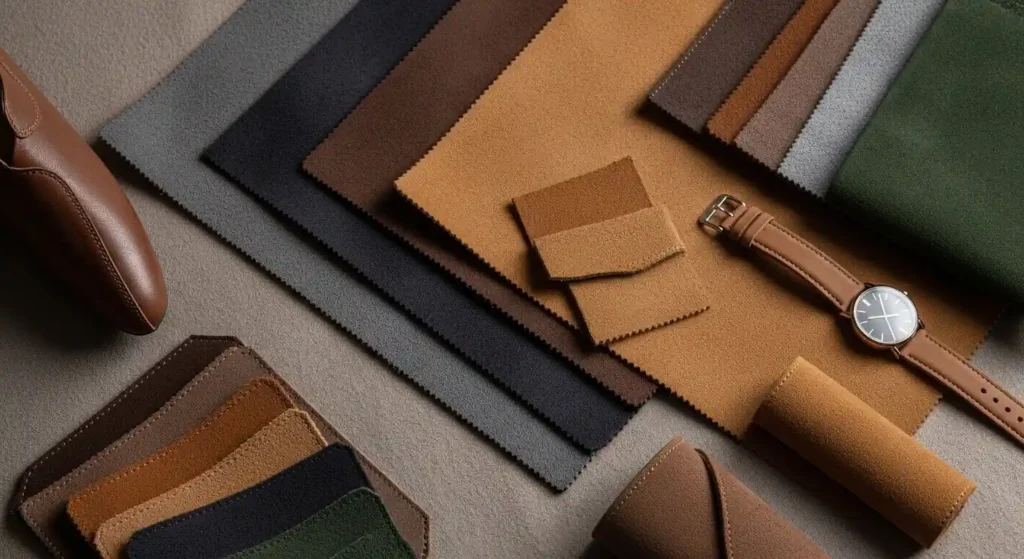
Soft-touch leathers dominate 2026 footwear trends. Nubuck and suede moved from occasional accent materials to primary choices for premium products.
Why Nubuck Is Trending
Nubuck offers tactile luxury that smooth leather can’t match. The lightly sanded top-grain surface creates a velvety texture that feels premium immediately.
Fashion runways featured nubuck prominently in Spring/Summer 2026 collections. Dries Van Noten, Prada, and Onitsuka Tiger all showcased nubuck footwear, signaling broad adoption across luxury segments.
Practical benefits drive the trend beyond aesthetics:
- Better temperature regulation than smooth leather
- Hides minor wear and scratches
- Develops attractive patina with use
- Feels softer and warmer to touch
Suede Applications
Suede appears in:
- Boot designs (Chelsea boots, ankle boots, desert boots)
- Loafer accents and overlays
- Sneaker panels for texture contrast
- Handbag details and trim
The material works particularly well in fall/winter collections but is increasingly appearing in year-round products with proper treatment.
Performance Treatments
2026 nubuck and suede receive advanced protective treatments:
- Water-resistant coatings that don’t alter the soft feel
- Stain-resistant finishes tested against real-world conditions
- UV protection to prevent fading
- Abrasion resistance for high-wear areas
These treatments make nubuck viable for daily-wear footwear, not just occasional fashion pieces.
Color Trends
Nubuck and suede appear in:
- Neutrals: Tan, beige, taupe, soft browns
- Rich tones: Deep burgundy, navy, forest green
- Classic shades: Black, charcoal gray
Neutral tones lead sales because they work across multiple outfits and seasons.
Need nubuck or suede samples for product development? Contact Akram Tannery to discuss treatment options and minimum order quantities for your collection.
Full-Grain Leather for Premium Footwear Brands
Full-grain leather remains the gold standard for premium footwear. The material uses the hide’s complete top layer without sanding or buffing, preserving natural grain and strength.
Why Premium Brands Choose Full-Grain
The footwear market showed 15% year-over-year growth in artisan boots using full-grain leather. Brands positioning products above $200 retail almost exclusively use full-grain materials.
Key advantages:
- Durability: Lasts for decades with proper care
- Strength: Tightest fiber structure in natural leather
- Character: Develops unique patina as it ages
- Repairability: Thick enough for resoling and restoration
Construction Methods
Full-grain leather pairs with premium construction:
- Goodyear welting: Allows multiple resoles, extends product life
- Blake stitching: Creates a sleeker profile for dress shoes
- Hand-stitching: Artisan construction for luxury positioning
The global leather footwear market projection of $253.2 billion by 2035 is driven largely by premium full-grain products in the $100-500 price range.
Market Positioning
Full-grain leather signals quality to educated buyers. Brands using it can charge 30-60% premiums over corrected-grain alternatives while maintaining strong sales.
Product categories where full-grain dominates:
- Oxford and Derby dress shoes
- Chelsea and chukka boots
- Premium sneakers (luxury athletic)
- Heritage work boots
- Artisan leather goods
Sourcing Considerations
Full-grain leather requires careful hide selection. Only top-quality hides work because imperfections aren’t hidden through sanding or heavy finishing.
This selectivity means full-grain costs 40-80% more than corrected grain. But the premium pricing it enables makes the investment worthwhile for brands targeting quality-conscious buyers.
Textured and Natural Grain Leather Designs
Smooth, uniform leather is losing ground to materials showing authentic natural characteristics.
Natural Grain Patterns
2026 trends favour leather displaying:
- Visible pore structure
- Natural markings (within reason)
- Grain variation across the hide
- Authentic texture you can see and feel
This shift reverses decades of preference for artificially uniform leather. Consumers now view natural variations as proof of authenticity, not defects.
Embossed and Printed Textures
Beyond natural grain, embossed textures create visual interest:
- Crocodile patterns: Most popular exotic embossing
- Snake textures: Fashion-forward statement pieces
- Geometric patterns: Modern, architectural looks
- Woven effects: Coastal aesthetic for casual products
These patterns offer exotic aesthetics without actual exotic leather costs or ethical concerns.
Mixed Textures
Brands combine multiple leather types in a single product:
- Smooth leather body with nubuck trim
- Patent panels with matte sections
- Woven leather accents on smooth backgrounds
Ralph Lauren and Miu Miu showcased woven leather details in Spring 2026 collections, bringing texture variety to classic silhouettes.
Market Response
Textured leather in accessories grew 18% in 2025. Handbags, wallets, and small leather goods using embossed or natural grain textures outperformed smooth alternatives in premium categories.
The trend extends to footwear, where textured panels add visual depth to sneakers, boots, and dress shoes without compromising durability.
Lightweight and Flexible Leather for Daily Wear
Comfort drives 2026 purchasing decisions. Lightweight leather that moves naturally with the foot is outselling traditional stiff materials.
Performance Requirements
Modern footwear leather balances:
- Lightweight feel (reduced thickness without losing strength)
- Natural flexibility (bends easily, returns to shape)
- Breathability (allows moisture escape)
- Durability (survives daily wear)
India’s lightweight leather footwear category showed 29% year-over-year growth, demonstrating global demand for comfortable daily-wear options.
Processing Innovations
New tanning methods create leather that’s:
- 20-30% lighter than traditional tanning
- More pliable after first wear
- Resistant to creasing and cracking
- Suitable for athletic-inspired designs
These properties make leather competitive with synthetic materials in performance footwear categories.
Product Applications
Lightweight leather appears in:
- Sneakers: Athleisure and fashion sneakers
- Loafers: All-day office comfort
- Travel shoes: Packable, comfortable options
- Walking shoes: Health-conscious casual footwear
The “sneakerina” trend, hybrid shoes blending sneaker comfort with ballet flat aesthetics, relies heavily on lightweight, flexible leather that can create sleek profiles.
Color and Finish Options
Lightweight leather works across color palettes:
- Neutrals: Beige, tan, soft brown
- Deep tones: Navy, burgundy, black
- Patent finishes: Modern shine with flexibility
- Matte surfaces: Contemporary casual looks
Brands like Puma and Adidas introduced luxury lightweight leather versions of athletic styles, with fashion houses following into the category.
Bulk-Ready Leather Sourcing for Growing Brands
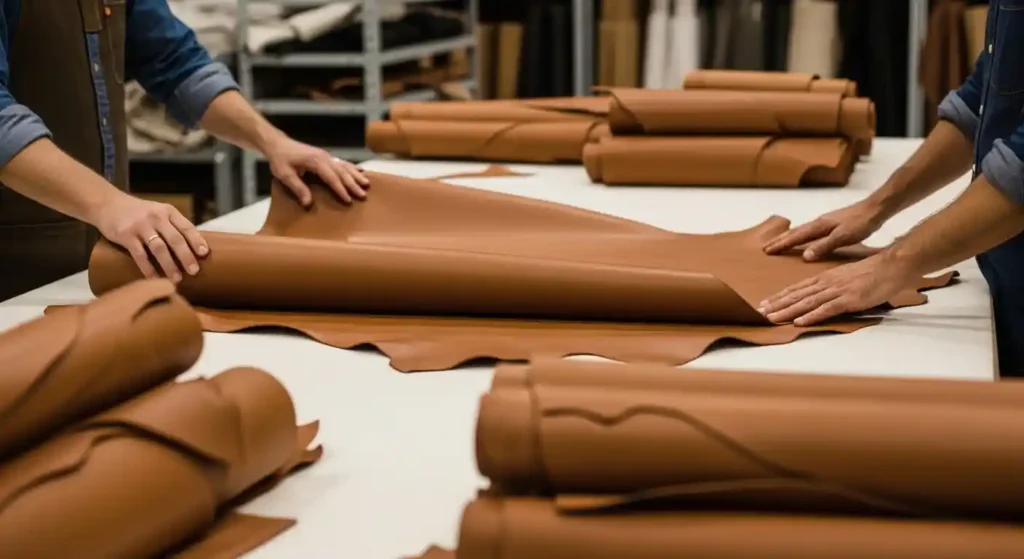
Scaling a footwear or accessories brand requires suppliers who deliver consistent quality at increasing volumes. Many brands struggle to find reliable sources.
What Growing Brands Need
Successful scaling requires suppliers offering:
- Consistent quality: Every batch matches approved samples
- Flexible minimums: Start small, increase as you grow
- Predictable lead times: Meet production schedules reliably
- Technical support: Guidance on leather selection and specifications
- Competitive pricing: Margins that support business growth
Common Sourcing Problems
Brands report these issues with unreliable suppliers:
- Quality varies between orders
- Minimum quantities too high for emerging brands
- Communication delays cause production problems
- Hidden costs appear after initial orders
- Certifications promised but not delivered
These problems cost brands thousands in lost sales, delayed launches, and quality issues.
Certification Requirements
Wholesale buyers and retailers now require:
- Material safety documentation
- Environmental compliance certificates
- Labor practice transparency
- Traceability documentation
Suppliers without proper certifications limit your market access.
Regional Sourcing Advantages
Pakistan leather suppliers offer compelling benefits:
- Cost efficiency: 30-40% lower than European sources
- Quality expertise: Decades of tanning experience
- Export infrastructure: Established shipping to global markets
- Capacity: Can scale with your business growth
Pakistan’s leather industry exports to the USA, Europe, the Middle East, and Asia, demonstrating the capability to meet international standards.
Akram Tannery: Bulk Leather Supplier for Fashion Brands
Akram Tannery supplies leather for footwear and accessories brands globally with 34+ years of experience and 5 million square feet of annual production capacity.
What makes them reliable:
Proven track record: Operating since 1990, supplying international brands
Quality consistency: Batch-to-batch uniformity is critical for production
Flexible capacity: Handle small initial orders and large-scale production
Material variety: Full-grain, nubuck, suede, embossed, vegetable-tanned options
Treatment expertise: Sustainable processing and modern finishing techniques
Global shipping: Export documentation and logistics for worldwide delivery
Responsive communication: Quick responses via email, WhatsApp, and phone
Competitive pricing: Pakistan’s cost advantages without quality compromise
Customer feedback:
“Fast delivery, amazing leather quality. We found Akram Tannery as a reliable resource for our footwear collection.”
“Excellent quality leather and a very responsive team. Looking forward to using them for handmade shoes.”
“The quality of their leather products is exceptional. The impact was evident in my sales and customer satisfaction.”
With a 4.8/5 Google rating from 73 reviews, consistency isn’t accidental; it’s systematic.
Scaling Strategy
Smart brands establish supplier relationships before they urgently need them. The process:
1. Sample evaluation: Request materials matching your requirements
2. Small test order: Verify quality and communication before committing
3. Production planning: Align lead times with your launch schedule
4. Volume growth: Increase orders as sales justify
5. Partnership development: Build relationships for long-term reliability
Ready to evaluate leather options for your 2026 collection?
Request samples specific to your product needs. Discuss technical requirements with experienced leather specialists. Get transparent pricing for both sampling and production quantities.
Don’t wait until you urgently need leather to start evaluating suppliers. The brands thriving in 2026 established reliable sourcing partnerships months ago.
Your footwear and accessories success depends on materials that meet market demands, sustainable credentials, premium textures, consistent quality, and competitive pricing. Akram Tannery delivers all four.
Start the conversation today. Your 2026 collection deserves reliable partners.
Frequently Asked Questions
What are the biggest leather trends for footwear in 2026?
Sustainable eco-certified leather, nubuck and suede finishes, full-grain premium materials, natural grain textures, and lightweight flexible leather dominate 2026 footwear. Brands prioritize materials offering both environmental credentials and premium aesthetics with proven durability.
Why is sustainable leather important for accessories brands?
Around 45% of consumers favour eco-friendly leather, and major retailers require environmental certifications. Sustainable leather provides LWG certification, chrome-free processing, and transparent supply chains critical for wholesale partnerships and premium market positioning in 2026.
What’s the difference between nubuck and suede leather?
Nubuck is top-grain leather sanded on the outer surface, making it more durable than suede, which comes from the inner hide layer. Nubuck offers better strength for footwear while maintaining the soft, velvety texture both materials share.
How much does full-grain leather cost compared to other types?
Full-grain leather costs 40-80% more than corrected-grain alternatives due to selective hide requirements. However, it enables 30-60% retail price premiums and lasts significantly longer, making it profitable for brands targeting quality-conscious buyers.
Where can I find reliable bulk leather suppliers for accessories?
Look for suppliers with 10+ years of experience, proven export operations, certifications (LWG, ISO 14001), flexible minimums, and verified customer reviews. Akram Tannery in Pakistan offers 34+ years of expertise, 5M sq ft capacity, and supplies the USA, Europe, and the Middle East markets with competitive pricing.