
Something extraordinary is happening in the leather industry, and if you’re not paying attention, you’re about to miss the biggest opportunity in decades. The custom leather manufacturing market isn’t just growing, it’s exploding. And 2026 is shaping up to be the year when customization transforms from a premium luxury option into the expected standard across the entire leather goods industry.
The numbers tell an incredible story. The global leather goods market reached $517.69 billion in 2025 and is projected to hit $881.41 billion by 2033. But here’s the crucial detail everyone’s talking about: custom and personalized leather products accounted for 24% of leather goods innovations in 2025, and that percentage is accelerating faster than anyone predicted.
What’s driving this seismic shift? Three powerful forces are converging simultaneously: consumer demand for personalized products has reached critical mass, technology has finally made custom leather production scalable and affordable, and younger generations simply refuse to accept mass-produced items when they can have something uniquely theirs.
Whether you’re a leather manufacturer, brand owner, designer, or entrepreneur considering entering the market, understanding why 2026 represents a pivotal moment could determine whether you thrive or struggle in the coming years. Let’s explore exactly what’s happening and why this year matters so much.
The Personalization Revolution Is Reaching Critical Mass
Walk into any store, scroll through any fashion website, or check out what people are posting on social media, and you’ll notice something remarkable: customization is everywhere. But this isn’t just a trend, it’s a fundamental shift in how consumers think about products.
The personalized leather goods movement started with luxury brands offering monogramming and moved into designer bags with customer-chosen colors. Now it’s evolved into something far more sophisticated. Consumers want to select every detail: leather type, color, stitching, hardware, interior layout, pockets, size modifications, and personalized stamps or embossing.
This isn’t happening in isolation. The broader customization trend spans industries from sneakers to watches to cars. Nike’s customization program generates billions in revenue. Car manufacturers now offer hundreds of options for personalizing vehicles. Leather goods are simply following this unstoppable pattern, and 2026 is the year when the infrastructure, technology, and consumer expectations all align perfectly.
Here’s what makes this moment special: until recently, custom leather manufacturing was expensive, slow, and limited to high-end boutiques. It took weeks or months to receive a custom piece, and prices were prohibitively high for most consumers. That’s changing rapidly, and 2026 represents the tipping point when custom leather becomes accessible to mass markets.
Why Consumers Demand Customization
Understanding consumer psychology reveals why personalization has become non-negotiable for growing segments of the market. Modern consumers don’t want to look like everyone else. They view purchases as expressions of identity, and mass-produced items increasingly feel impersonal and inauthentic.
Social media amplifies this effect. When everyone can see what everyone else owns, having something unique becomes more valuable. Personalized leather bags, custom wallets, and bespoke leather jackets make better social media content because they tell individual stories.
There’s also an anti-fast-fashion backlash driving demand for custom leather goods. Consumers are tired of disposable fashion and want items that last. Custom leather products combine durability with personal meaning, creating emotional connections that mass-produced items rarely achieve.
Technology Makes Custom Production Scalable
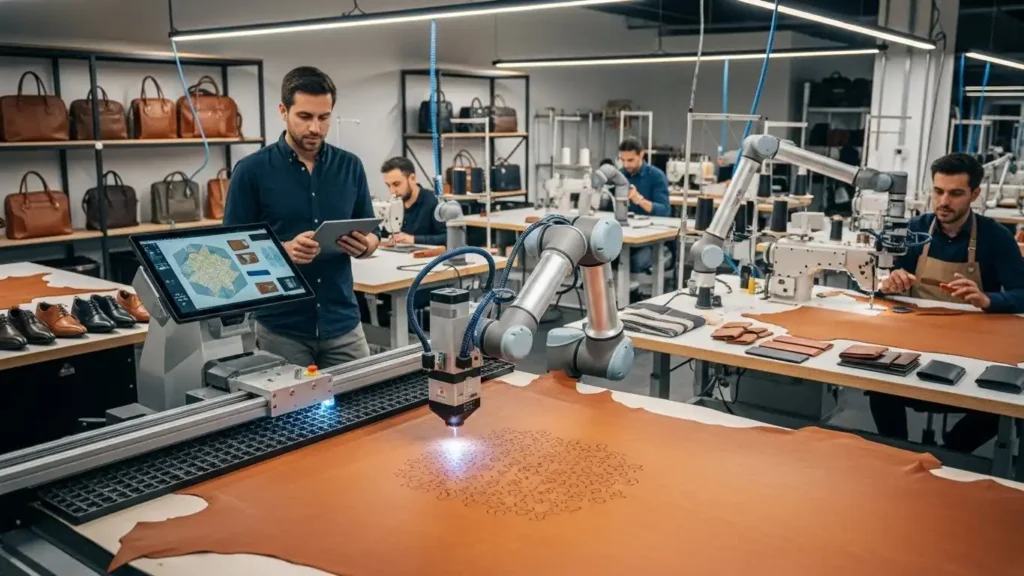
The real game-changer for custom leather manufacturing in 2026 is technology. Innovations that seemed futuristic just five years ago are now becoming standard production tools, making customization faster, cheaper, and more consistent.
Laser Technology Revolutionizes Customization
Laser cutting and laser engraving have transformed how manufacturers handle custom leather work. These technologies cut leather with millimeter precision, engrave intricate designs without heat damage, create complex patterns that would be impossible by hand, and operate with speeds that make custom production nearly as fast as mass production.
For custom leather manufacturers, this means you can offer customers thousands of design options without maintaining massive inventories or employing armies of skilled artisans. The laser does in minutes what traditionally took hours or days.
Leather bags with custom designs, wallets with intricate engravings, and belts with personalized patterns are no longer luxury outliers, they’re becoming standard offerings that brands can produce profitably at scale.
Digital Design Tools Empower Customers
3D visualization software and augmented reality applications let customers see exactly what their custom leather product will look like before ordering. They can rotate it, zoom in on details, change colors in real-time, and visualize how personalized elements will appear.
This technology solves one of the biggest problems with custom leather goods: managing customer expectations. When customers can see realistic renderings of their customized piece, returns and dissatisfaction plummet. They know exactly what they’re getting.
For leather manufacturers, these tools reduce the back-and-forth communication that traditionally made custom work time-consuming. Customers make decisions independently, submit orders digitally, and manufacturing can begin immediately.
Automation Meets Craftsmanship
Here’s something that surprises many people: automation doesn’t eliminate craftsmanship in custom leather manufacturing; it enhances it. Modern automated cutting machines handle the repetitive, precision work that machines do better than humans, freeing skilled artisans to focus on the complex work where human expertise creates real value.
This hybrid approach makes custom leather production economically viable at scales that were impossible before. A manufacturer can offer customization without proportionally increasing labor costs or production time.
AI-Powered Customization Platforms
Artificial intelligence is entering leather manufacturing through customer-facing customization platforms. These systems guide customers through design choices, suggest combinations that work well together, predict what customers will like based on their selections, and flag potential production issues before orders are placed.
For customers who feel overwhelmed by endless options, AI assistants simplify the customization process while still delivering personalized results. This accessibility expands the market beyond design-savvy early adopters to mainstream consumers.
Market Dynamics Favor Custom Production
The economic forces shaping the leather goods industry in 2026 strongly favor custom manufacturing over traditional mass production.
Premium Pricing Without Premium Costs
Custom leather products command higher prices than standard items. Consumers willingly pay 20-50% premiums for personalized goods. But with modern technology, the actual cost increase for manufacturers might be only 10-20%. This creates attractive profit margins that make customization financially compelling.
For leather brands, this means you can improve profitability while actually giving customers more of what they want. It’s a rare win-win scenario.
Inventory Advantages
Traditional leather manufacturing requires predicting demand, producing inventory, warehousing products, and hoping you guessed correctly about colors, styles, and sizes. Wrong predictions mean markdowns, waste, and lost profits.
Custom leather manufacturing operates differently. You produce items after customers order them, eliminating most inventory risk. Yes, you need raw materials, but finished goods inventory drops dramatically. For brands, this means less capital tied up in unsold products and fewer end-of-season clearance sales destroying margins.
Direct-to-Consumer Benefits
Custom production pairs beautifully with direct-to-consumer models that dominate modern retail. When you’re selling directly to customers through your website, offering customization differentiates you from marketplace sellers and creates pricing power that resists the race-to-bottom competition plaguing e-commerce.
Your custom leather bags can’t be comparison-shopped as easily as generic items. Customers can’t find identical products cheaper elsewhere when each piece is unique. This protects your margins and builds brand loyalty.
Sustainability Drives Custom Manufacturing
The environmental conversation around fashion and leather goods is intensifying, and custom manufacturing offers surprising sustainability advantages that resonate with conscious consumers.
Producing What’s Actually Wanted
Mass production inherently wastes resources. Brands produce millions of items hoping to sell them, and significant percentages end up unsold, marked down, or eventually discarded. This waste includes the leather materials, labor, energy, and all resources invested in unwanted products.
Custom leather manufacturing produces only what customers actually want. Every piece serves a purpose from day one. This fundamental efficiency aligns with sustainable fashion principles without requiring exotic materials or complex offsets.
Durability Through Personal Connection
Here’s something retailers have known for decades: people take better care of items they’ve personalized. That custom leather wallet with your initials? You’ll use it for years. That personalized bag you designed yourself? You’ll repair it rather than replace it.
This emotional durability matters tremendously for sustainability. Products that last longer and get repaired rather than discarded reduce environmental impact more effectively than many other interventions.
Supporting Local and Small-Scale Production
Custom leather manufacturing works economically at smaller scales than mass production. This enables local leather makers, small batch production, and artisan manufacturers to compete effectively. The result is more distributed, less carbon-intensive production and preservation of traditional leatherworking skills.
For consumers who care about ethical manufacturing, custom leather goods from identifiable makers offer transparency that mass production rarely provides.
E-Commerce and Digital Marketing Advantages
The infrastructure supporting custom leather manufacturing has matured perfectly for the 2026 moment. Digital commerce tools make offering and selling customized products easier than ever.
Customization as Marketing Differentiation
In crowded online markets, custom leather manufacturers have built-in marketing advantages. Your products are inherently more interesting, more shareable on social media, more likely to generate customer stories and reviews, and more defensible against commodity competition.
Every customized leather bag that leaves your workshop becomes a conversation starter and potential marketing asset. Customers show off their unique pieces, tag your brand, and drive organic awareness that money can’t buy.
Data Advantages
Custom manufacturing generates valuable data about customer preferences. You learn what combinations sell, which customization options customers use most, price sensitivity for different features, and emerging design trends before they hit mainstream markets.
This intelligence helps you refine offerings, optimize production, develop new products customers actually want, and market more effectively using insights from real behavior.
Premium Brand Positioning
Offering customization elevates brand perception. Even if many customers ultimately choose relatively standard configurations, knowing they could have customized creates a premium experience that justifies higher pricing across your entire range.
The Luxury Market Leads the Way
Luxury leather goods have always offered customization, but 2026 brings this to unprecedented levels. Major fashion houses are expanding bespoke programs, offering customization on more products, using technology to enhance the luxury experience, and training artisans specifically for custom work.
When luxury brands invest heavily in customization, it validates the trend and creates aspirational demand that filters to mid-market and accessible luxury segments. What Hermès offers in 2026, mainstream brands will offer in 2028. Smart leather manufacturers positioning themselves now will capture the market as it expands.
Heritage Craftsmanship Meets Modern Customization
The most successful custom leather brands in 2026 will balance traditional leatherworking techniques with modern technology. Customers want the authenticity and quality of handcrafted goods combined with the convenience and precision of digital customization.
This balance is easier to achieve now than ever before. Laser engraving can reproduce hand-tooled aesthetics. Digital patterns can guide traditional stitching. Custom leather production doesn’t mean abandoning craft, it means amplifying it.
Challenges Creating Opportunities
The rapid growth of custom leather manufacturing creates challenges that present opportunities for prepared brands.
Managing Complexity
Offering customization introduces operational complexity. You’re managing more SKUs, coordinating more production variables, handling more customer communication, and ensuring quality across diverse configurations.
Smart leather manufacturers are solving this with robust systems, clear processes, experienced teams, and technology that automates complexity. Companies that master these challenges gain competitive advantages that later entrants struggle to replicate.
Setting Boundaries
Not everything should be customizable. Successful custom leather brands offer meaningful choices within smart constraints. They provide enough options to feel personalized without overwhelming customers or making production unmanageable.
Finding this balance separates thriving custom manufacturers from those who struggle. The brands getting it right in 2026 are studying customer behavior, testing different customization levels, and continuously refining their offerings.
Production Time Expectations
Customers want customization but still expect fast delivery. Managing these competing pressures requires efficient production systems, clear communication about timelines, and sometimes, premium pricing for rush orders.
Leather manufacturers meeting customer expectations for both personalization and speed will capture disproportionate market share.
Regional Differences in Custom Manufacturing
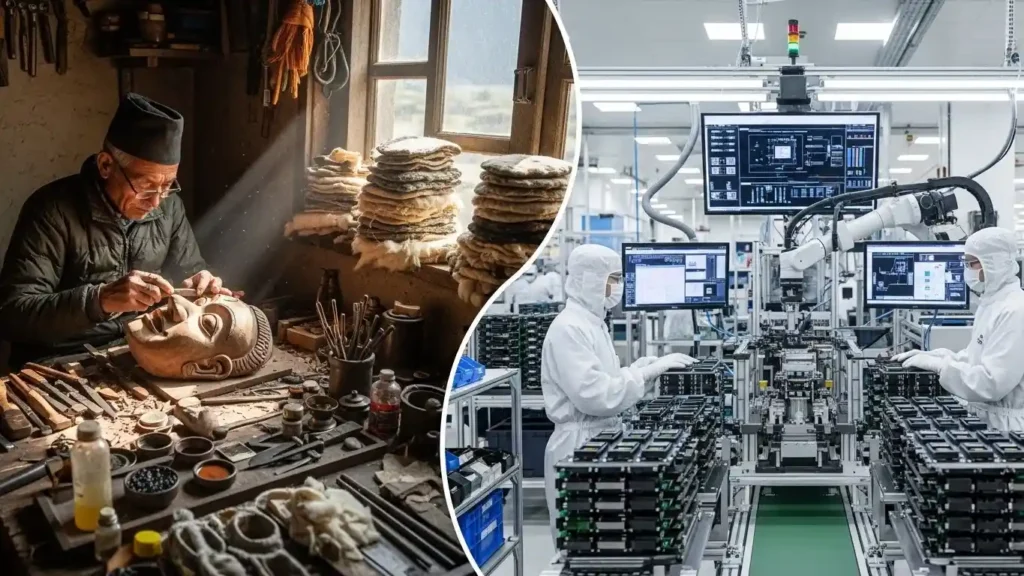
The custom leather manufacturing boom plays out differently across regions, creating opportunities depending on your location and target markets.
North America shows strong demand for personalized leather goods, particularly in the premium segment. Consumers value American-made leather products and willingly pay premiums for custom craftsmanship.
Europe has deep leatherworking traditions, and consumers are comfortable with bespoke goods. Custom leather manufacturing thrives in European markets where quality and heritage matter tremendously.
Asia-Pacific represents the fastest-growing market overall, with rapidly increasing interest in customization. The region combines traditional craftsmanship with technological adoption, creating ideal conditions for innovative custom leather production.
Frequently Asked Questions About Custom Leather Manufacturing
Why is custom leather manufacturing growing so fast?
Custom leather manufacturing is growing rapidly due to converging factors: consumer demand for unique, personalized products has reached critical mass, technology like laser cutting and AI-powered design tools has made customization scalable and affordable, and younger generations view personalized items as standard rather than luxury. Market data shows customized leather products commanded 24% of innovations in 2025, with growth accelerating into 2026.
How much more expensive are custom leather products?
Custom leather products typically cost 20-50% more than comparable mass-produced items, but modern manufacturing technology means actual production costs increase only 10-20%. This creates attractive profit margins for manufacturers while remaining accessible to mid-market consumers. Premium positioning and emotional value justify higher prices while improved efficiency keeps them reasonable.
What technologies enable custom leather manufacturing at scale?
Key technologies include laser cutting and engraving for precision customization, 3D visualization and augmented reality for customer design tools, automated cutting machines that handle repetitive work efficiently, AI-powered platforms that guide customers through customization, and digital inventory systems that manage production complexity. These technologies make custom production nearly as efficient as mass production.
Can small leather manufacturers compete with large brands?
Yes, custom manufacturing actually favors smaller operations. Custom leather production works economically at smaller scales than mass production, allowing local artisans and small manufacturers to compete effectively. Personalization creates differentiation that protects against commodity competition from larger brands. Many successful custom leather businesses start small and scale through expertise rather than volume.
What customization options do customers want most?
Popular customization options include monogramming and personalized engraving, choice of leather type and color, hardware selection (buckles, zippers, clasps), interior layout and pocket configuration, size modifications for a perfect fit, stitching color and pattern choices, and custom stamps or embossed designs. Successful brands offer meaningful choices within manageable constraints rather than unlimited options.
Is custom leather manufacturing more sustainable?
Custom manufacturing offers several sustainability advantages: producing only what customers actually want eliminates waste from unsold inventory, personalized items create emotional connections that extend product lifespan, custom production works at smaller scales supporting local manufacturing, and made-to-order models reduce the carbon footprint of warehousing and shipping excess inventory. These factors make custom leather more sustainable than mass production.
How long does custom leather production take?
Production time varies but typically ranges from 2-6 weeks, depending on complexity and manufacturer capacity. Advanced manufacturers using modern technology can produce simpler custom pieces in 7-14 days. Premium custom leather goods requiring extensive handwork might take 4-8 weeks. Clear communication about realistic timelines helps manage customer expectations, while rush options can serve urgent needs at premium prices.
What’s the minimum order for custom leather manufacturing?
Minimum order quantities vary widely by manufacturer. Some custom leather makers accept single-piece orders direct from consumers, while others require minimums of 50-500 units for wholesale or private label clients. Technology has significantly reduced minimum requirements; what previously required 1,000-unit minimums might now be feasible at 100 units. Many manufacturers offer flexible minimums based on customization complexity and relationship development.
Position Your Brand for the Custom Manufacturing Revolution
The evidence is clear: 2026 represents an inflection point for custom leather manufacturing. The technology has matured, consumer demand has reached critical mass, market conditions favor customization, and the competitive landscape rewards brands that embrace personalization.
The question isn’t whether custom leather manufacturing will dominate the industry; it’s whether your brand will be positioned to capture this opportunity or left struggling to catch up as competitors establish market positions.
At Akram Tannery, we’ve watched the leather industry evolve for generations. We understand that successful custom manufacturing starts with exceptional materials, quality leather that can be customized without compromising integrity, consistency that ensures every custom piece meets exacting standards, and versatility that accommodates the diverse needs and customization demands.
Our expertise in producing premium upholstery leather, vegetable tanned leather, and specialized finishes positions us perfectly to support the custom leather manufacturing revolution. Whether you’re an established brand expanding into customization, an entrepreneur launching a custom leather line, or a manufacturer seeking reliable material sourcing for bespoke production, we understand the unique requirements custom work demands.
The leather goods market is projected to reach $881.41 billion by 2033, with personalized products capturing an ever-increasing share. The manufacturers and brands that thrive will be those who start positioning themselves now, developing the systems, relationships, and expertise that custom manufacturing requires.
Ready to discuss how quality leather materials can support your custom manufacturing ambitions? Visit akramtannery.com to explore our materials, discuss your specific customization needs, or learn how our decades of leather expertise can help you capture the opportunities that 2026 presents.
The custom manufacturing revolution is here. The brands that act now will shape the industry’s future while others watch from the sidelines. Don’t let this moment pass. Partner with leather experts who understand both traditional craftsmanship and modern innovation. When the biggest year for custom leather manufacturing arrives, be ready to seize it.