
When people buy shoes, they usually look at the outside first. But the inside of a shoe matters just as much. The lining is the layer that touches your foot all day long. It controls how warm, dry, and comfortable your feet feel. That is why choosing the right leather for footwear linings is one of the most important steps in making good shoes.
In this guide, you will learn about the main shoe lining leather materials, how lining affects comfort, and what to check for strong performance. Whether you are a shoe brand, a factory buyer, or a small workshop, this guide will help you pick footwear linings leather from a tannery you can trust.
What Is a Footwear Lining?
A footwear lining is the inner layer of a shoe. It sits between the outer upper and your foot. Most shoes have linings in three main areas:
- Vamp lining covers the front of the foot and toes.
- Quarter lining covers the sides and back of the heel.
- Sock lining (insole cover) sits under the foot.
The lining does several jobs. It makes the shoe soft to touch. It helps the shoe keep its shape. It soaks up sweat and lets air move. A good lining also stops rubbing, so you get fewer blisters.
Why Leather Is the Best Choice for Shoe Linings
Shoe makers can use fabric, foam, or synthetic linings. But leather lining is still the top choice for quality shoes. Here is why:
- It breathes. Leather has tiny natural pores that let air and moisture escape.
- It absorbs sweat. Leather can take in moisture and release it slowly, keeping feet drier.
- It shapes to your foot. Over time, leather lining molds to the shape of the wearer’s foot.
- It lasts longer. Leather lining often lasts as long as the shoe itself.
- It reduces odor. Because leather breathes, it builds up less smell than plastic linings.
Main Types of Leather Used for Footwear Linings
Goat Leather Lining
Goat leather is thin, light, and strong. It has a smooth, soft feel that is great against the skin. Many dress shoes and fashion shoes use goat lining because it is comfortable and long-lasting.
Sheep Leather Lining
Sheep leather is very soft and flexible. It feels gentle on the foot and is often used in ladies’ shoes, slippers, and high-end footwear. It is not as strong as goat or cow leather, so it suits lighter shoes best.
Pig Leather Lining
Pig leather is one of the most popular lining materials around the world. It has large pores, so it breathes very well. It is also tough and low in cost. This makes it a common choice for everyday shoes and work boots.
Cow Leather Lining
Cow lining leather is thicker and very durable. It is often split into thin layers to make it lighter. Cow lining works well in boots, safety shoes, and heavy-duty footwear that needs extra support.
Vegetable-Tanned Lining
Vegetable tanned leather is made with natural plant tannins. It is firm, breathable, and very kind to the skin. Many premium and handmade shoes use veg-tan lining because it ages beautifully and has a natural feel.
Crust Lining Leather
Crust leather is tanned and dried but not fully finished. Some shoe factories buy crust leather and finish it themselves to match their exact color and feel. To learn which option fits your factory, read our guide on crust leather vs. finished leather.
How Lining Leather Affects Comfort
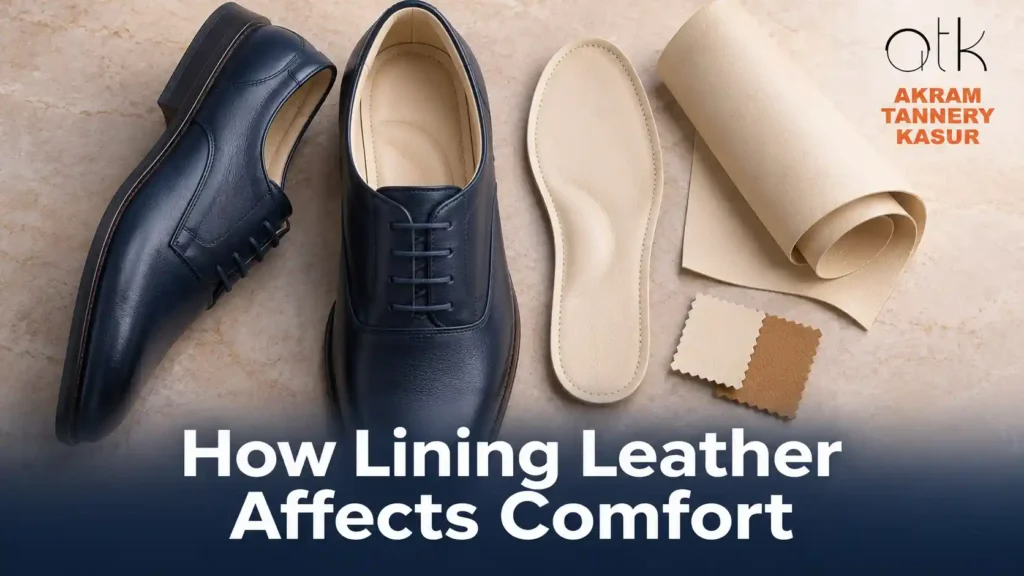
Comfort is the main reason people choose leather lining. Here are the comfort factors to look for:
Softness and Feel
The lining should feel smooth and soft on bare skin or socks. Rough or stiff lining can cause rubbing and blisters. Goat, sheep, and soft pig linings are the most comfortable choices.
Breathability
Feet sweat a lot, especially in warm weather. A breathable lining lets moisture escape so feet stay cool and dry. Natural, open-pore leathers work best. Heavy surface coatings can block air flow, so lining leather should have a light finish.
Moisture Control
Good lining leather should absorb sweat and then dry out quickly. This is called water vapor absorption and release. It keeps feet fresh and helps stop bacteria from growing.
Thickness
Most shoe lining leather is between 0.6 mm and 1.0 mm thick. Thin lining keeps shoes light and flexible. Thicker lining adds padding and support in boots.
Performance Factors to Check Before You Buy
Comfort is important, but the lining must also perform well over time. Check these points:
- Abrasion resistance. The heel area rubs against the foot with every step. Strong lining leather should not wear through quickly.
- Colorfastness. The color should not rub off onto socks or feet, even when wet with sweat.
- Tear strength. Lining is stitched and pulled during shoe making. It needs to hold stitches without tearing.
- pH balance. Lining touches skin for hours. It should have a skin-friendly pH to avoid irritation.
- Chemical safety. Good lining leather should be free from harmful chemicals and meet international safety rules.
- Flexibility. The lining must bend easily as the foot moves, without cracking.
Ask your supplier for test reports on these points. A trusted tannery will check quality at every stage. Learn more in our article on how modern tanneries maintain leather quality from start to finish.
Matching Lining Leather to Shoe Type
| Shoe Type | Best Lining Leather | Why |
| Dress shoes | Goat or vegetable-tanned | Smooth, elegant, breathable |
| Casual shoes | Pig or goat | Soft, breathable, good value |
| Boots | Cow or thick pig | Strong and supportive |
| Ladies’ fashion shoes | Sheep or goat | Very soft and light |
| Safety and work shoes | Cow or pig | Tough and long-lasting |
| Sandals and slippers | Sheep or soft goat | Gentle on bare feet |
Finishes for Lining Leather
Lining leather usually has a simple, light finish so it can breathe. But some shoes need special touches:
- Nubuck leather can be used in heel areas for extra grip, so the foot does not slip.
- Laminated leather can add strength in parts of the shoe that need more support.
- Leather patches and labels can be added inside the shoe to show your brand name.
How to Choose a Reliable Lining Leather Supplier
The right supplier makes a big difference. Look for these qualities:
- Experience. A tannery with many years in business understands how lining leather should feel and perform. You can read our story to see how Akram Tannery has grown since 1990.
- Steady quality. Every batch should match in color, thickness, and softness.
- Custom options. Your supplier should offer different colors, thicknesses, and finishes.
- Samples. Always test a sample before placing a big order.
- Export knowledge. A supplier who ships worldwide knows global standards and delivery times.
You can also explore our full range of leathers to find the right match for your shoes.
Final Thoughts
The lining is the part of a shoe that people feel the most, even if they never see it. Picking the right footwear lining leather improves comfort, breathability, and the life of the shoe. Goat and sheep leather offer softness. Pig leather offers great airflow at a good price. Cow leather adds strength for boots. Vegetable-tanned leather gives a natural, premium touch.
At Akram Tannery, we produce high-quality leathers for footwear brands and factories around the world. Ready to find the best lining leather for your next collection? Send us a leather request or contact our team today.
Frequently Asked Questions (FAQs)
What is the best leather for shoe linings?
Goat and pig leather are the most popular choices. Goat leather is soft and smooth, while pig leather is very breathable and cost-effective.
Why is leather lining better than synthetic lining?
Leather breathes, absorbs sweat, and molds to your foot. Synthetic linings often trap heat and moisture, which can cause odor and discomfort.
How thick should shoe lining leather be?
Most shoe lining leather is between 0.6 mm and 1.0 mm thick. Thinner lining suits dress shoes, while thicker lining suits boots.
Is pig leather good for shoe lining?
Yes. Pig leather has large pores that let air flow freely. It is strong, breathable, and affordable, which makes it a common lining choice.
Can vegetable-tanned leather be used for lining?
Yes. Vegetable-tanned leather is natural, breathable, and skin-friendly. It is often used in premium and handmade shoes.
How can I order custom lining leather?
You can schedule a meeting with Akram Tannery to discuss your color, thickness, and finish needs. Our team can also send samples before you place a full order.